Showing posts with label HOLIDAYS IN CHINA. Show all posts

Friday, 11 April 2014

UNESCO sites in Beijing, Things to see in Beijing

1. The Forbidden City (The Imperial Palace)

The Forbidden City (紫禁城) was the former residence of the Ming and Qing Emperors since 1420. Construction of the Forbidden City began in 1406 under the rule of the Ming Yongle Emperor; taking 14 years and a million workers to complete. The main colours of the Forbidden City are red and yellow, both colours that symbolise the Emperor and the nation of China. The Forbidden City has over 980 buildings and each building has mini statues that line the roofs. The name Forbidden City comes from the fact that during the Imperial period, only the Emperor, his immediate family and workers were allowed to enter the site. Those who disobeyed this rule faced punishment of death.
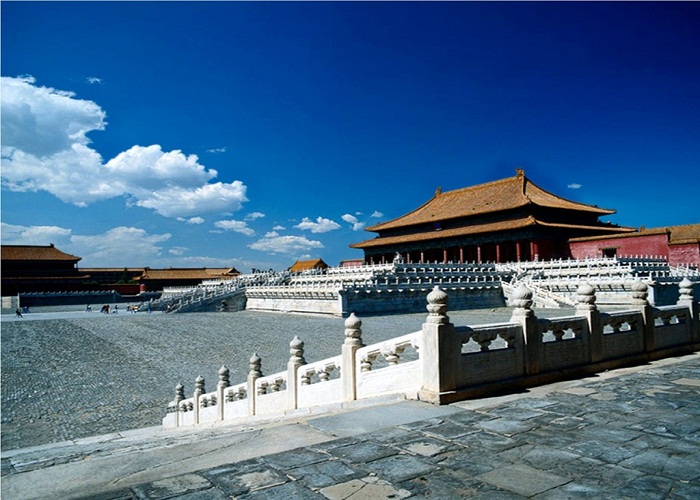
Forbidden City with China Holidays

2. The Great Wall of China

The Great Wall of China (万里长城) is one of the seven wonders of the modern world and is arguably the most famous sight in China. Construction of the original wall began in 200BC and continued to be altered and enhanced all the way to the 14th Century Ming era. The main purpose of the Wall was to defend China from invaders in the neighbouring north. The length of the wall is almost 4,000 miles long and stretches all the way across the northern section of China. The most visited areas of the Wall include Badaling section, Mutianyu section and Simatai section, all accessible from Beijing city.
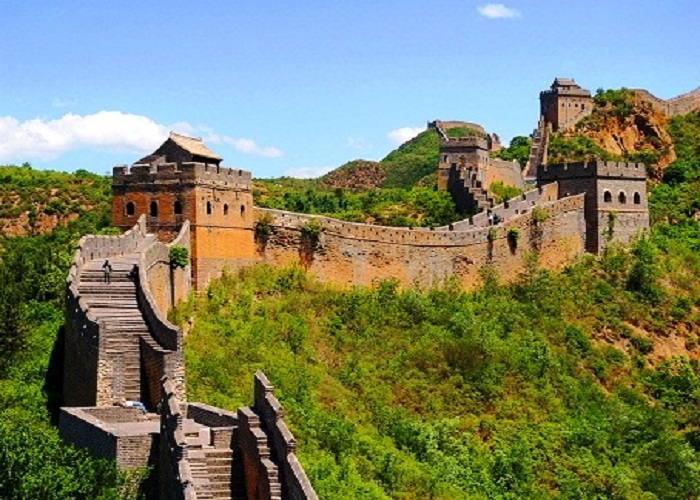
Great Wall of China with China Holidays

3. Temple of Heaven

Like the Forbidden City, the Temple of Heaven (天坛) was constructed during the reign of the Ming era Yongle Emperor. The Temple of Heaven is the largest complex of sacrificial buildings in China, covering an area of 273 hectares. The Temple was built as a place of prayer and sacrifice for the Emperors, where they would ask for good harvest and good fortune. The main building in the Temple is called the Altar of Prayer for Good Harvest which stands majestically in the centre of the Temple.
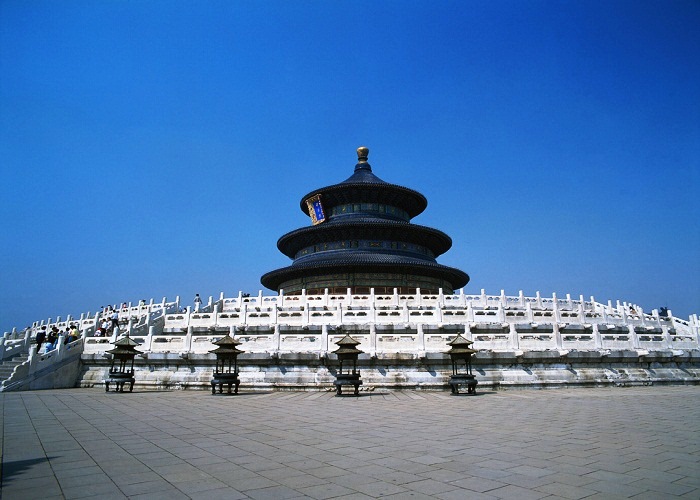
Temple of Heaven, Beijing, China Holidays

4. The Summer Palace

The Summer Palace (颐和园) was the former holiday retreat of the Qing Emperors. Construction began in 1750 under the reign of the Qianlong Emperor, considered one of the greatest Emperors in China’s extensive history. The Summer Palace is famous for its beautiful Kunming Lake and Longevity Hill which are juxtaposed in a beautiful Fengshui style. During the 19th century, the Summer Palace was ransacked by Anglo-French troops and destroyed in parts. The Summer Palace, like the Forbidden City, is a beautiful red colour.
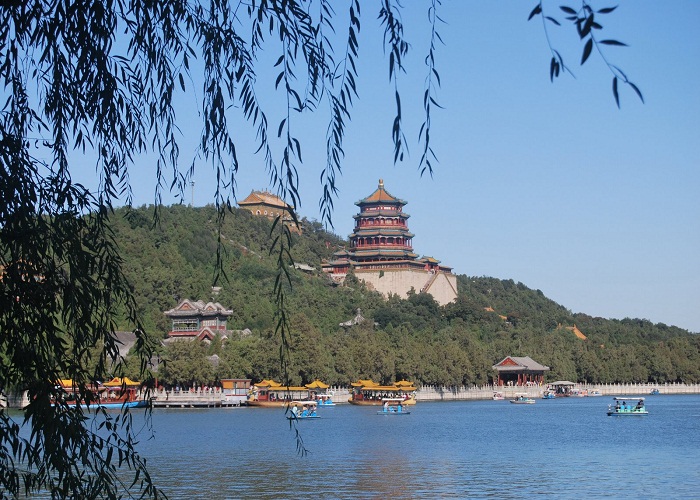
Summer Palace, Beijing, China Holidays

5. Peking Man at Zhoukoudian

In the 1920s, archaeologists found skeletal remains and stone tools which were estimated to date back 500,000-300,000 years old. The remains of the Peking man (北京猿人) have brought about debate regarding what relation they have to present day humans. The shape of the skull of the Peking man showed particular dissimilarities with homo-erectus skulls and raised the question whether this Peking man was the predecessor to homo-erectus i.e. modern man. Others claim that Peking man is more related to the ape and could in fact actually be the skeletal remains of apes.
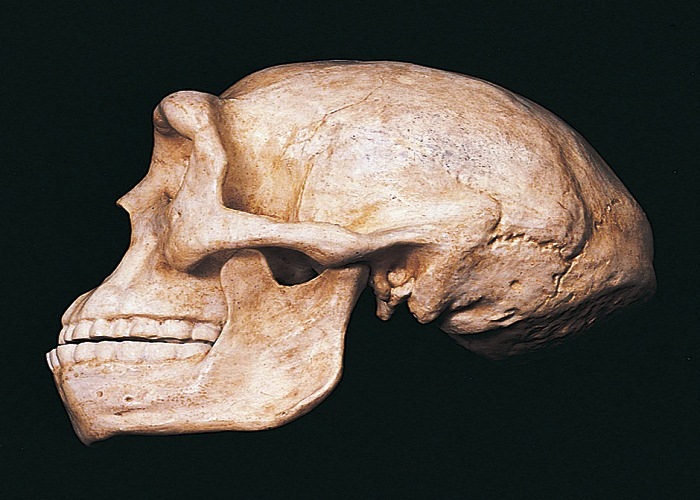
Peking Man, Beijing, China holidays

6. The Ming Dynasty Tombs

The Thirteen Ming Dynasty Tombs (明十三陵) are located in North Beijing and is the final resting place of the Ming Emperors. In the early 14th Century, the Ming Tombs were commissioned under the reign of the Yongle Emperor. He chose the southern side of Tianshou Mountain as the location based on Fengshui teachings. On the path up to the Ming Tombs, a row of Ming era statues stand at each side, made up of human guards and animals. Emperor Yongle selected a grandiose mausoleum for himself which is a beautiful gold and red.
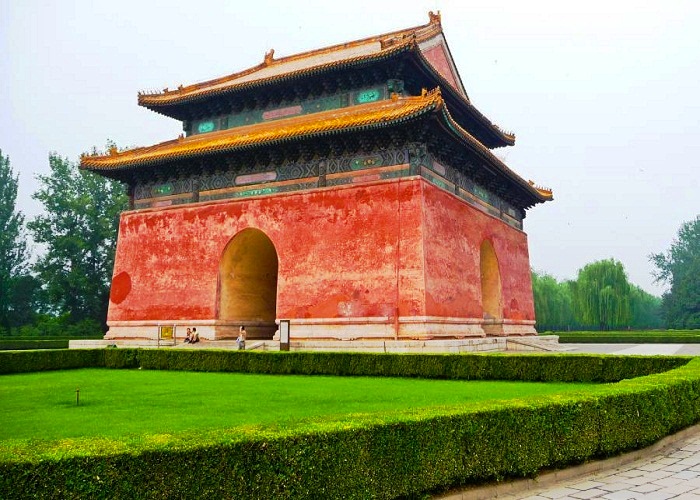
Ming-Tombs-Beijing, China Holidays
For more information regarding UNESCO sites in China please check our website at www.ChinaHolidays.co.uk, call us on 020 7487 2999 or email sales@chinaholidays.com


Monday, 17 December 2012

Destination Travel Show London 2013

Dear All, 


We are exhibiting at the Destinations Travel Show 2013 in London and we are offering FREE TICKETS. Please call is on 020 7487 2999 or email us your full postal address at sales@chinaholidays.com


China Holidays Team 


Monday, 13 August 2012

#ChinaHolidaysChat on Twitter!


Tomorrow, the 14th August 2012 at 1400 GMT we are going to talk about Festivals in China.

To join us, just add the #ChinaHolidaysChat hashtag to your Tweet to be included in the conversation.
Please tweet your questions and we will answer them!

Connect with ChinaHolidays on Twitter for best 
information about travelling to China.


Friday, 27 July 2012

Visit two new Chinese Heritage sites added to the World Heritage List with China Holidays


Chengjiang Fossil Site in China’s balmy Yunnan province and Xanadu, the legendary summer palace of the Mongol leader, Kublai Khan, in the present-day province of Inner Mongolia, have been awarded prestigious UNESCO World Heritage site status.


Chengjiang Fossil Site (and museum) has become a Natural World Heritage Site for its spectacular fossils, over 525 million years old, which reveal the wonders of a long-dead marine ecosystem. Extinct creatures such as velvet worms have been preserved in incredible detail, along with earliest examples of the sea gooseberry, and the oldest-preserved vertebrate. Over 200 fossils are displayed at the 512 hectare site, which experts think gives the clearest picture yet of marine ecology in the Cambrian Period. It is China’s first fossil site inscribed on the UNESCO World Heritage List, and is already starting to attract increasing numbers of visitors from around the world, drawn by the relative freshness of its discovery and the number and quality of the artefacts.

The Chengjiang Fossil Site is in Yunnan Province in South-Western China, known for its more temperate climate and relaxed atmosphere. Yunnan is also one of the most geographically and ethnically diverse provinces in China and a favourite destination on China Holidays tours.  Other attractions in the province include the Naxi folk orchestra in Lijiang and the dramatic Tiger Leaping Gorge.  

There are direct flights to Kunming, the chilled-out capital of Yunnan Province, from most major cities in China, including Beijing and Shanghai, and also from South-East Asian cities such as Bangkok and Rangoon.
China Holidays offer day trips within Kunming, exploring this fascinating city and its surroundings in greater depth. In addition to the Chengjiang Fossil site, visit the remarkable limestone Stone Forest, the Bamboo Temple deep in the mountains and the exotic Bird and Flower market in the old town.

Yunnan Province borders regions and countries as varied as Laos, Vietnam, Myanmar, Sichuan Province and Tibet, making it an ideal part of China for travellers wishing to combine their holiday with one or more of these adventurous destinations. The food and culture in Yunnan itself reflects their proximity, with spicy rice noodle soup, mint and potato balls among the unusual local favourites.

Xanadu, in the Chinese province of Inner Mongolia, has been added as a cultural site, underlining its status as a site of historical importance and place of legend.

Most famous to British people as the ‘stately pleasure dome’ of Coleridge’s poem ‘Kubla Khan’, present-day Xanadu represents the remains of the summer palace of Kublai Khan, grandson of the notorious Genghis.

Built in 1256, the remains of Xanadu represent the legacy of Kublai Khan’s attempts to merge Mongol and Han Chinese culture. Kublai Khan invited the Chinese architect Liu Bingzhong to design his summer palace, which he did according to the principles of feng shui. There were once reportedly 108 temples at the site. Marco Polo’s account of a visit to Xanadu in about 1275 mentions two palaces, one marble and one made of cane, surrounded twice by square stone walls. The elaborate gilt cane palace was detached and re-assembled each time Kublai Khan moved location, reflecting his nomadic Mongol heritage.

The site is also interesting historically as many discussions of religious importance took place there, leading to the spread of Tibetan Buddhism which is still an influential part of China’s culture today.

Nowadays among the remains of the city you can still see palaces, temples, tombs, nomadic encampments, canals and other water works, which are considered to be well-preserved for their age.

Xanadu is not far from the Inner Mongolian city of Xilinhot, which is famous for its beautiful grasslands and Dalinor Lake. Xilinhot is also home to an annual Nadaam Festival, a national celebration which includes Mongolian horse-riding skills, with wild races, outlandish costume competitions, wrestling and archery. Nadaam is held in early July each year. There are direct flights to Xilinhot from Beijing and Hohhot, the provincial capital of Inner Mongolia.

Visitors on China Holidays tours to the area can journey to a traditional Grassland two hours from Xilinhot – and accommodation is even in a deluxe Mongolian yurt. Guests can watch activities such as archery and a Mongolian toast ceremony, with singing and dancing around a bonfire.

China has 43 World Heritage Sites on the UNESCO World Heritage List, one of the most numerous in the world. It has a further 50 sites on the UNESCO Tentative List, which hopefully will be inscribed in future years.

Discover the hidden secrets of China’s past with China HolidaysAs specialists in China, with over 10 years’ experience organizing holidays, we can help you with exclusive group departures or unique tailor made holidays to suit your own individual needs. China Holidays make sure to go the extra mile at all times to provide you with an unforgettable, experience of a lifetime. For comprehensive information on how we can help with your travel arrangements, call China Holidays’ friendly team of expert advisors on 020 7487 2999, or contact us by email on sales@chinaholidays.com