Showing posts with label China holidays. Show all posts

Thursday, 12 February 2015

The Ice and Snow Festival Travel Tips

The Ice and Snow Festival in Harbin, China
The city of Harbin, formerly colonised by the Russians, lies in the North-Eastern tip of China – at this time of year, frozen at temperatures below 25 degrees Celsius.
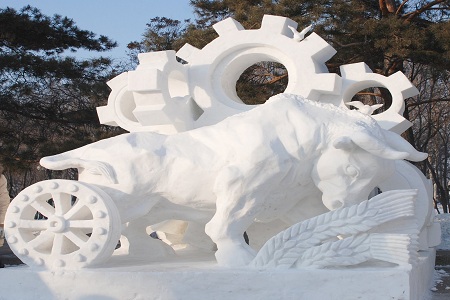
But wrapped up in layer upon layer of clothing, thousands of visitors flock here each year to see the spectacular the Ice and Snow Harbin festival, where ice and snow is exquisitely carved into elaborate sculptures.
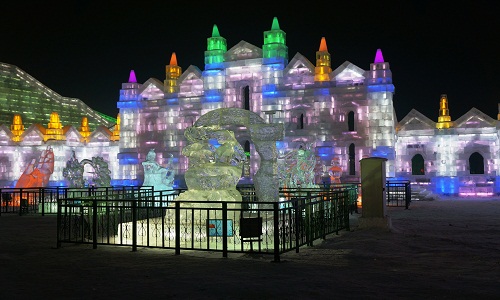
Ice and Snow World and the Ice Lantern Festival opens every December with a dramatic fireworks display over the crystalized sculptures.  On January 5, it’s formally open to the public.
The Ice and Snow Festival in Harbin, China
In recent years sculptures have included such diverse subjects as Disney fairy-tale palaces, traditional pagodas, a giant Harbin (own-brand) beer bottle and the face of Mao Zedong. The festival is beautiful during the day with the sun’s reflections, but fabulous at night when little lights, frozen inside blocks of ice, are switched on. My favourite were the sculptures which had ice slides – probably intended for children, people of all ages climb up ice steps or ladders, then whizz down them very quickly!
One rather unusual attraction is the Siberian Tiger Park, home to several of these endangered and majestic creatures. Visitors are kept safely in caged vehicles or walkways whilst the Siberian tigers and other wild beasts (including white tigers and ligers) are given live animals to eat at feeding time. The lunch-time feeding slot is not for the faint hearted as a live-lunch of chickens and calves is often on the menu.

The Ice and Snow Festival in Harbin, China
Harbin’s Russian past is still evident in places – in the architecture of Central Street (Zhongyang Dajie), with its cobbles and onion-domed buildings, in its leafy boulevards, and reportedly in the drinking habits of the locals! Perhaps the most lovely building in the city (at least among those made of stone and mortar) is St Sophia’s Cathedral. This Russian Orthodox cathedral is in the middle of a square not far from the festival, and in the midst of all the festivities provides a feeling of something permanent and ancient.
Tips:
  • Wear two of everything but make sure the outer layers are not white. With the amount of snow in the city there is a good possibility you won’t be seen.
  • If you are short of any clothes you can buy at the local supermarkets and at very low price.
  • Wear warm shoes with a good grip
  • Wrap up you camera as it freezes. Take spare battery with you.
  • Do sightseeing between 11am and 2 pm ( it’s the warmest time of the day)
  • During visit to the Ice Festival please don’t stand close to the sculpture. The ice blocks can fall down, especially if the weather is warmer.
  • Carry a flask with hot tea
  • When in the warm room do not touch radiators – they are boiling hot.
Getting there:
China Holidays’ Harbin Ice Festival 2016 tour visits not only Harbin and all its sights introduced above, but also the capital city, Beijing. Please check The Ice and Snow Festival in Harbin 2016  or phone China Holidays on 020 7487 2999 for details. Alternatively email us on sales@chinaholidays.co.uk

Wednesday, 29 October 2014

Dazu Rock Carvings

Dazu Rock Carvinsg with China Holidays
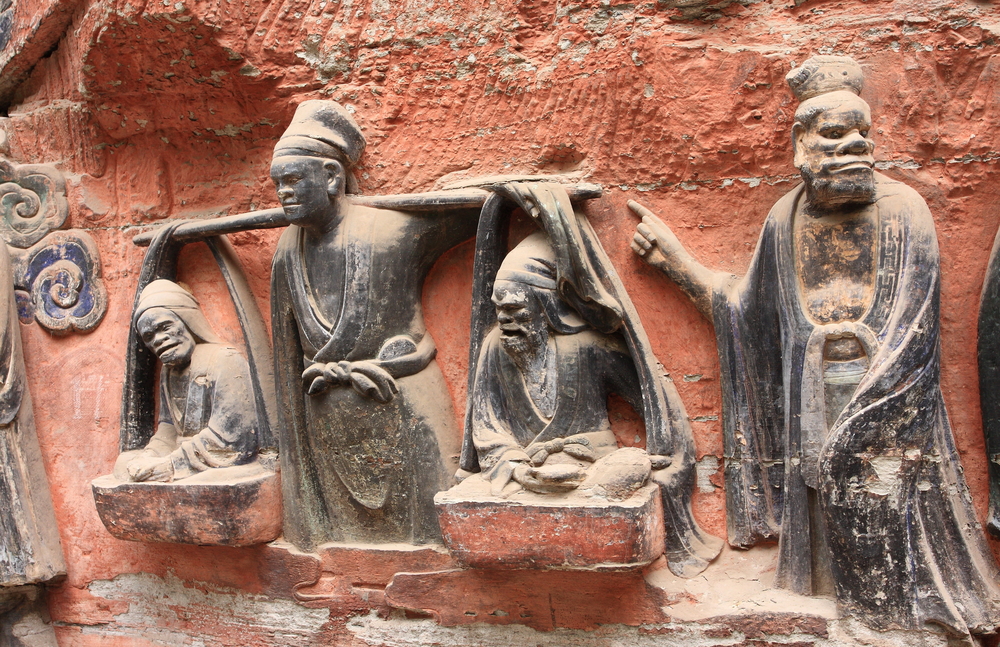
Dazu, is UNESCO World Heritage Site and home to many caves and grottoes in which are thousands of Buddha statues, most dating from between the 9th and the 13th centuries, the Tang and Song Dynasties.
The Dazu Rock Carvings and statues are scattered over some 70 sites in Chongqing’s Dazu County. They area is easily accessible by road from Chongqing ( two hours drive ) or Chengdu ( four hours drive). The statues here are stylistically different from those at Yungang Grottoes and Dunhuang Mogao Caves, both of which were much earlier projects. Dating back to the Tang and Song dynasties, the carvings at Dazu are Chinese in style, whereas earlier caves at Longmen, Dunhuang and Yungang have foreign influences. Revealing Buddhist, Taoist, and Confucian influences, the Dazu Carvings range from small, intimate statues dedicated by pious families to massive reclining Buddhas, requiring hundreds of artisans.
Although many of the statues have deteriorated over the centuries, there are a few that still remain in good condition. Expect to spend good two tours at the site itself.
China Holidays can organise independent travel to Dazu Rock Carvings or as a part of the group travel. The tour featuring visit to Dazu is The Land of Nine Dragons.  For more information please email sales@chinaholidays.co.uk or call us on 020 7487 2999 or visit our website at www.Chinaholidays.co.uk

Monday, 18 August 2014

Temple of Heaven, Beijing

Visit Beijing with China Holidays
The Temple of Heaven served Ming and Qing Dynasty emperors as a vast sacred space to perform ceremonial rites. Prior to the winter solstice, the emperor would lead a solemn procession from the Forbidden City to the Temple of Heaven. At first light on the winter solstice, after a night of fasting and ritual cleansing, the emperor would offer ritual sacrifices and make a report to heaven. He would also visit on the 15th day of the first lunar month to pray for a good harvest. The temple was vitally important to the imperial universe as it was the link between the emperor and Heaven.
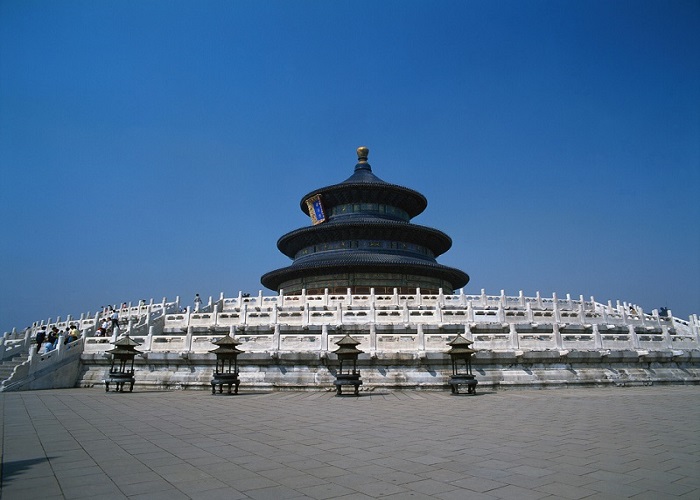
Temple of Heaven China HolidaysThe Temple of Heaven incorporates several religious structures, the crown jewel of which is the Hall for the Prayer of Good Harvests. The layout of the compound reflects its religious purpose and so adheres to geomantic precepts. For instance, the northern end of the park is curved while the southern end is square, reflecting the traditional Chinese conception of heaven as round and the earth as square. Likewise, the park gates are located at the four cardinal points.
The Circular Altar is the three-tiered structure closest to the southern gate. Built in 1530, the Circular Altar was where the emperor, facing north, gave heaven his report. It was acoustically designed to help the emperor’s words reach the cosmos. Indeed, the altar magnifies the voice of a speaker standing in its center, though only the speaker will hear this magnification, as sound waves bounce off the balustrades. Another interesting feature of the altar is that it was built with rows of marble slabs in multiples of the number 9, which was considered the most auspicious number. The first row has 9 slabs, the second 18, and soon.
Visit Beijing, Temple of Heaven, China HolidaysMoving northward, the next compound is the Imperial Vault of Heaven, which contained tablets of the emperor’s ancestors that were used in the solstice ceremony. The vault is surrounded by the Echo Wall, which has marvellous acoustics. Its curvature acts as a parabola allowing two people to converse in quiet voices at a great distance from each other. However, on a crowded day when every visitor attempts this experience, all you may hear is a cacophonous muddle.
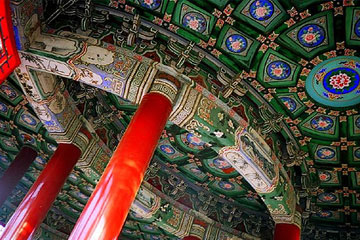
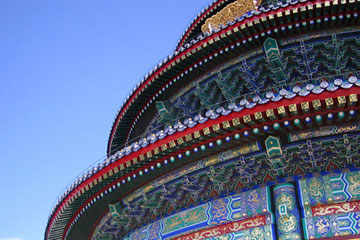
Circle around the outside of the vault after exiting and proceed north through a gate to the elevated walkway. As you walk, the Hall for the Prayer of Good Harvests will rise into view. This is where the emperor prayed to heaven on behalf of his subjects. This wooden tower was erected without a single nail, it’s held in place by an ingenious system of supporting beams and massive pillars. The design is also rich in symbolism. Topped by a golden orb, its cascading roof is blue, representing the color of heaven. The four central pillars represent the seasons, the 12 inner pillars symbolize the months, and the 12 outer pillars symbolize the 12 watches of the day. Inside the hall, on the ceiling, is a single golden dragon representing the emperor. Initially constructed in 1420, the Hall was set ablaze by a bolt of lightening in 1889 and was faithfully rebuilt with lumber imported from Oregon.
Tour featuring visit to the Temple of Heaven are The Land of Nine Dragons and Panda, Palaces and Pagodas. If you wish to visit the Temple of Heaven on tailor made itinerary please email sales@chinaholidays.co.uk or call us on 020 7487 2999. Alternately visit our website at www.chinaholidays.co.uk

Thursday, 6 February 2014

10 Travel Tips for China

When travelling to China, it is key to understand a bit about local culture and way of life. When travelling to China it is important that those who are visiting the Middle Kingdom have accustomed themselves with the below 10 tips recommended by China Holidays.

1. Obtaining a Chinese Visa
When travelling to China, it is required by law that all non-Chinese citizens require a Chinese visa in order to enter the country. For UK citizens travelling to China as a tourist, it is mandatory to receive an L Visa. One can apply for an L Visa at a Chinese Visa Centre in London, Manchester or Edinburgh; applicants can also apply for an L Visa via post. When applying for a Chinese visa, an applicant will need a passport with 6 months validity; a filled out visa application form (which you can require online from the official China Visa Centre website); a passport sized photo; a photocopy of your passport photo pages and a photocopy of your last Chinese visa (if applicable). A citizen of the UK, when applying for travel, can apply for a single entry or a multiple entry visa. Applicants can stay in China for a maximum of 30 days each time. For more information how to obtain Chinese Visa please check our dedicated site: http://www.chinese-visas.co.uk

2. Picking the best time to travel to China
Unlike the UK, China is a country that has extreme temperature differences depending on the season. Winter in China is extremely cold, with some northern areas reaches lows of -30 degrees Celsius; summer can reach extremely uncomfortable highs, for example in Hong Kong, to such degrees as 32 Degrees. The best time to travel to China is during spring and autumn, as the temperature during this period is extremely pleasant and has a nice cool feeling to it. The sky is usually much clearer during these periods too, giving China Holidays’ guests perfect photo opportunities. It is important however to avoid the first week in May and the first week in October, as these are national holidays in China and the country gets too busy to enjoy as a tourist.

3. Electricity in China
The electricity voltage in China is generally 220V. Therefore, adaptors are required to use your electrical appliances in China. The majority of hotels will sell adaptors for around 100-200 Yuan. Around the hotel, there are 220V and 110V electric sockets; however, in most hotel rooms the electric sockets are 220V.

4. Food in China
Although I personally adore Chinese food, it is not to every Westerners taste and sometimes meals in China can be quite trying and unpleasant. Chinese food in China does not really taste like that in the UK, so some tourists may be surprised. However, there is no need to worry. In most 4* hotels in the major cities such as Beijing and Shanghai, there will be a western option for both breakfast and dinner. Throughout the majority of modern cities in China, there is also the option of fast food outlets, such as McDonalds, KFC and Subway. It must be noted though that in remoter areas, such as Tibet and Yunnan Province, there will be only a Chinese option most likely available

5. Tipping in China
Although it is not mandatory to tip in China, we at China Holidays advise our clients each to tip around RMB30-40 for the driver and tour guide. A tip of RMB150 is a mandatory requirement on Cruise liners on the Yangtze River and will be collected on boarding the ship. In high end restaurants, a small tip would be polite and a sign of respect to the waiter. In smaller, more local restaurants, a tip is not expected ever and waiters will usually attempt to return a tip to you if you try to give them one.

6. Injections
Before travelling abroad, one should always check with their GP and see what they recommend. We at China Holidays recommend getting vaccinations for typhoid, hepatitis A, tetanus and polio. Make sure you check with your GP which areas are seen as malaria warning zones. Areas in south China such as Yunnan and Hainan Island are usually susceptible to malaria so please check with your GP before travelling. For high altitude areas such as Tibet, take some ginger biscuits to assist with altitude sickness.

7. Money
The currency in China is called the Yuan or Kuai. One pound is roughly equal to 9.5/10 Yuan. You can change your money in the UK before you leave, or you can change your money at the airport on arrival into China. Furthermore, some higher end hotels have a currency exchange which does not charge commission. Our tour guides can also assist you in changing money at the bank.

8. Water
China Holidays highly recommends not drinking tap water in China as it may be contaminated. Buy bottled water instead from your hotel or from a supermarket. When buying bottled water, please make sure that the cap and seal are unbroken as it may happen that the bottle has been refilled with tap water.

9. Toilet Facilities
Toilet facilities at major tourist sights and hotels are of a high standard. However, outside of these areas toilets are of an extremely low standard and are usually squat toilets with little privacy and cleanliness. Always remember to bring toilet roll with you when you leave your hotel.

10. Tea and coffee
One of the most important facilities for any Brit travelling abroad is the availability of tea and coffee. In most hotels, Chinese tea and coffee are provided. However, real English tea is difficult to come by so it is best for you to bring it yourself from the UK. Most hotels will provide a kettle in your room. If you do not have one, please ask at reception and they will provide you with one.

For more information about travelling to China please email sales@chinaholidays.com or call us on 020 7487 2999. Alternatively visit our website www.ChinaHolidays.co.uk

Tuesday, 14 January 2014

China: Skyscraper culture reaches its peak

In the last 10 years of China’s history, there has been a mass increase in the number of skyscrapers in China’s major cities and financial hubs. This phenomenon has allowed for a number of cities in the Middle Kingdom to resemble cities such as New York and Frankfurt, and has become a distinct image of how China’s position as an economic power is growing and has become a country that’s development is relentless. Below, I will give a brief introduction to a few of the tallest buildings in China and show how a visit to these magnificent buildings can be simply fitted in to a China Holidays’ itinerary.

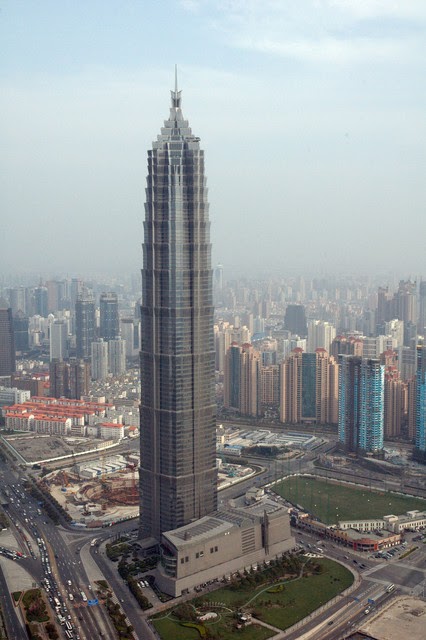
When thinking of Chinese skylines, most people will automatically think of the postcard image of the Shanghai Pudong skyline which sits on the banks of the majestic Huangpu River. The Pudong skyline is home to not only the tallest building in China, but also home to some of the most iconic buildings in Eastern Asia. The tallest building in China is the Shanghai World Financial Centre which was completed in 2008.
Jin Mao Tower
This towering skyscraper is made up of shopping centres, apartments and the Park Hyatt, Shanghai hotel. There is also a viewing deck at the top of the building which offers panoramic views of the city. The most distinct architectural component of the tower is the trapezoid aperture at the top of the tower which was designed to control wind pressure.

The World Financial Centre is located next to the Jin Mao Tower which was the previous tallest building in the PRC. Like the Petronas Towers in Malaysia, the Jin Mao tower has a distinct architectural style which mimics the tiered model of the majority of Asian pagodas. Though not as tall as the previously mentioned skyscrapers, one of the most iconic buildings in Shanghai, the Oriental Pearl Tower, which still stands at a whopping 470M, stands amongst Pudong’s other skyscrapers and really adds distinction to Shanghai’s spectacular skyline.

China Holidays can offer tours to the Pudong section of Shanghai and organise for our clients to tour inside these towers. Furthermore, China Holidays’ clients can enjoy the view of the skyline from across the Huangpu River on the world-renowned Bund.

Outside of Mainland China, both Taiwan and Hong Kong offer prime examples of Chinese skyscraper artistry. The Taipei 101 tower in Taipei is the tallest building in Taiwan standing at a mighty 510M. The Taipei 101, like the Jinmao Tower, was previously the official tallest building in the world until 2004. Like the Jinmao Tower further, the Taipei 101 has adopted the Pagoda trend into its architectural style and designed the building to be protected against typhoons and earthquakes which are prominent in Taiwan. In July 2011, the Taipei 101 was awarded certificate in its energy efficiency, and was named the tallest green building in the world.

The Hong Kong skyline is as famous as the Shanghai skyline and has been expanded throughout the second half of the 20th century. One of the most famous structures in Hong Kong is the Bank of China Tower which is located on Hong Kong Island. The structure of the building is supposed to represent growing bamboo shoots, which is a symbol in Chinese culture of prosperity and longevity. Like many buildings throughout China, the structure and architectural style of the Bank of China Tower applies the ancient Chinese philosophy of Fengshui, which brings peace and prosperity to its structures.

The Hong Kong skyline now brings in many additional tourists through its nightly ‘A Symphony of Lights’ show which sees many buildings lighting up to timed music. This show has been added to the Guinness Book of World Records as the largest permanent light and sound show in the world.

If you are interested in seeing the Taipei 101 tower in Taiwan, why not check out China Holidays’ ‘Taiwan’ Tour which covers an extensive visit of the unique island. Many of our tours at China Holidays offer extensions to Hong Kong and it is easy no matter where you are in Central Hong Kong to see the city’s immense skyline.

Skyscraper culture in China is on the increase all the time with more and more apartments, hotels, shopping areas and offices being built every day. Shanghai will continue to lead in height with the addition of the new Shanghai Tower which will be completed by 2014 and stand at a height of 632M.

For more information about travelling in China please call China Holidays on 020 7487 2999 or email us on sales@chinaholidays.com. Alternatively check our website on www.chinaholidays.co.uk

Chinese Gardens and Garden Cities

Chinese gardens, like the UK, are world famous and hold their own unique style and layout which entices tourists and green fingers to come to China to gaze upon their beauty. We at China Holidays encourage our guests to take an excursion to see one of China’s beautiful garden towns and see how they differ from those of other countries.

Chinese garden style has evolved over 3,000 years and comes in an arrangement of styles, including vast gardens, Imperial Gardens and more intimate gardens for scholars, poets, soldiers and merchants as a place to escape from the outside world. A typical style Chinese garden is surrounded by walls and usually includes more than one pond. There are usually an assortment of halls and pavilions which are connected by winding paths and galleries. Some gardens too contain Chinese towers, known in English as Pagodas.

Yuyuan Gardens
There are examples of gardens in China’s major cities. Probably the most famous of these is the Yuyuan Gardens in Shanghai. The Yuyuan Gardens were created by a general during the Ming Dynasty period (1368-1644) as a gift for his father to enjoy in his old age. The garden became the most lavish garden in Shanghai and so much expense was put into its creation that it eventually ruined the general financially. The garden was open to damage during the 19th century. Both during the Opium Wars and the Taiping Rebellion, structures within the gardens were destroyed. These structures could not again be repaired until the 1950s after Shanghai had gained independence away from Japanese and Western influence. The Yuyuan Gardens cover an area of two hectares and contains many exquisite halls and ponds with stunning, rare fish in them. The Yuan Ming Yuan Garden in Beijing, too, is an example of Chinese garden style. Inside the ground of the Yuan Ming Yuan Gardens, there are the old ruins of an ancient maze, and ruins of an ancient palace, which existed as the former Summer residence of the Qing Emperors.


Some of the most famous garden cities in China are in the neighbouring areas of Shanghai. The most famous of these cities are Suzhou and Hangzhou. In Suzhou, tourists can visit the Classic Gardens of Suzhou, a group of gardens which have been awarded UNESCO status. These gardens were built from the Northern Song Dynasty in the 11th Century to the late Qing Dynasty in the 19th Century. Most of these gardens were built by scholars and embody key features of classical Chinese Gardens, such as the placement of rocks and hills to fit the laws of Fengshui. Furthermore, these gardens house pavilions and pagodas, another feature of Chinese gardens. The Suzhou area became extremely popular during the Ming Dynasty as a place of relaxation for the elite and over 200 private gardens existed at that time. Now, 8 of the finest gardens have been selected for UNESCO heritage.

Hangzhou is the largest and capital city of Zhejiang Province. Hangzhou is renowned for its natural beauty and is often credited as being the most beautiful city in China. One of the most famous and beautiful sights in Hangzhou is West lake, a UNESCO World Heritage Sight which acts as a centre for the beautiful natural landscape of Hangzhou. Hangzhou is home also to stunning botanical gardens and protected wetlands which house many beautiful species of birds and plant-life. Hangzhou is also one of the stops of the Grand Canal which was built during the Sui Dynasty (581-618AD). The Grand Canal was built to connect Beijing in the north with Shanghai in the south, as well as connect the waterways of the Yangtze and Yellow River together. The Grand Canal adds to the beautiful natural scenery of Hangzhou and gives tourists an opportunity to see an austere edge to China.

China has many wonderful examples of Chinese garden style. The placement and design of these gardens is extremely important for maintaining a relaxing and calming atmosphere for guests and local residence. Throughout history, Chinese gardens have been a place of calm and tranquility and thanks to Chinese policy and UNESCO status; these gorgeous natural wonders are maintained and protected. China Holidays can help organise tours which offer excursions to these gardens and garden cities, as well as organise a tailor-made itinerary which just visits Chinese gardens for the botanist enthusiasts.

For more information about Gardens of China please email sales@chinaholidays.com or call 020 7487 2999 or check our website at www.ChinaHolidays.co.uk

Friday, 6 December 2013

Food in China

An Ancient Chinese proverb says “To the ruler, the people are heaven; to the people, food is heaven." This proverb clearly shows that food to the Chinese is like tea to the British. In China, dinner is a time of communication, sharing and discussion. During major festivals, food has always played an important role. During Spring Festival, dinner time brings the family together; during the Qingming festival, food is placed at the graves of ancestors as an offering to relatives in the afterlife.

China, having an area of 9,700,000KM2, and, being almost as big as the United States, has a diverse menu of dishes and cooking styles. One of the major differences in China is the choice of staple food. Whereas in the north, the staple of choice is noodle, the south is keener to have rice as the accompanying component. As an avid lover of Chinese dishes, I will now give a brief description 5 of my favourite dishes which can be enjoyed on any of our China Holidays’ tours.

As mentioned previously, I love all Chinese dishes from all areas of the country, but the cuisine I like best comes from the north east region of China, and is known as (东北菜). Dongbei food originates from the Manchus, who used to live in that area, and relies heavily on thick well preserved ingredients to help the locals tackle the harsh winter weather. Two of my favourite dishes come from the Dongbei region. The first is called Guo Bao Rou (锅包肉) which translates as coated boiled meat. This dish contains thin slivers of pork which are coated in batter and fried along with ginger, scallions, soy sauce, garlic and chilli. When cooked and crisp, these pork slices are coated in a thick gravy which is made up of Rice vinegar, ginger, garlic and potato starch to give it a thick, warming feel.

A second dish from the Dongbei region is the delicious vegetarian dish Di San Xian (地三鲜) which translates as the three fresh vegetables from the ground. This dish consists of potato, green pepper and aubergine cut into equal slivers and fried in garlic, oil and soy sauce. When cooked and soft, these vegetables are coated in a delicious gravy made up of garlic, dark soy sauce, sugar, stock and garlic. These dishes really help warm you on a cold winters’ day.

The next dish comes from Shanghai and is a type of dumpling called Xiao Long Bao (小笼包) which translates as ‘Little basket of buns’. These mouth-watering dumplings are filled with pork, crab, cabbage or roe and are usually dipped in rice vinegar and chilli. Xiao Long Bao make up part of China’s ‘small eats’ (小吃) menu and are great for snacks and sharing with friends.

Sichuan is famous for its spicy food and is famous for using a type of spice called Mala (麻辣) which both pleasantly numbs and tingles your taste buds. One of Sichuan’s most famous spicy dishes, is Gong Bao Chicken (宫保鸡丁), known to us in the UK as Kung Pao Chicken. Gong Bao chicken is very popular throughout the western world and it is no surprise; the ingredients include chicken, Sichuan peppers, peanuts and spring onion, covered in a light rice wine sauce. In my personal opinion, this is one of the most addictive Chinese dishes and never fails to disappoint. It’s so simple yet so delicious.

The final dish is the most famous dish in China and possibly one of the most famous dishes in the world. Go past any Chinese area in any western city and you will no doubt see roasted ducks hanging in the window of butcher shops, being aired out to give them their rich aromatic taste. The roasted duck is originated from Beijing and is most commonly known as Peking duck (北京烤鸭). The Peking duck started as a dish of the Emperors and would be seen on any royal menu. During the Qing Dynasty (1644-1912), the dish began to spread down to the upper classes and eventually to the common Chinese man as a sought after dish. The duck takes 65 days to prepare and must be cooked in a specialised oven. Peking Duck usually comes with pancakes, spring onion and delicious plum sauce to make an addicitive mix.

Above are just a few examples of dishes from China which to me personally, exemplify China and provide the western tourist tastes which cannot be found in a Chinese takeaway in England. China Holidays will open our guest’s taste buds to a medley of flavours and tastes enticing you to keep returning for more.


To Taste China please call 020 7487 2999 or email sales@chinaholidays.com. Alternatively check our website at www.chinaholidays.co.uk

The Yangtze River: The lifeline of China

The Yangtze River is the longest river in Asia and is the third longest river in the world, stretching from the Tibetan Plateau in the west of China, and draining into the East China Sea at Shanghai, in East China. With one third of the Chinese population living on the Yangtze River basin, the Yangtze River has long been an important resource to the people of China and with the introduction of the Three Gorges Dam; the largest hydro-electric dam in the world, in 2012, the importance of its resource has continued to grow. China Holidays organises many group tours which allow for our clients to take a 3-4 night cruise up or down the Yangtze River, enjoying beautiful sights and exciting excursions.

The Yangtze River has a history that spreads back thousands and thousands of years. Human activity in the Yangtze Three Gorges Area has been discovered which dates back to over 25,000 years ago. There are signs of rice culture and rice production which suggests that the people who lived on the river basin of the Yangtze were some of the earliest rice users in the world. During the Han and Warring States period in Chinese history (475BCE-220CE), irrigation systems were being used on the Yangtze River, allowing for the Yangtze to become of economic importance and allowed for agriculture to become a stable sector. The Yangtze was and still is an important transportation method also. After the construction of the Grand Canal during the Sui Dynasty Period (581-618AD), the Yangtze River was connected with the Yellow River in north China allowing for transportation of products and people between the north and south. The Yangtze River often acts as a dividing line of the country of China, with the agriculture, climate, economics and customs being different between the different sides of the river.

At China Holidays, we can offer tours of the Yangtze River both upstream and downstream. The upstream route takes 5 days and 4 nights. It starts in Yichang in Hubei Province, travelling west and ending up in Chongqing. Going downstream, takes 4 days and 3 nights and starts in Chongqing, ending in Yichang. No matter whether you choose to go upstream or downstream, guests will have the same opportunities to see the same magnificent sights and natural scenery along the way.

During a cruise on the Yangtze River, China Holidays’ guests will have the opportunity to go on excursions down some of the many tributaries that the Yangtze River has. For example, an excursion down the Daning River allows China Holidays’ guests to see beautiful peaks, unusual stones and thrilling shoals. Guests will also take an excursion through the Three Gorges of the Yangtze River, which offer a most exhilarating experience. The Three Gorges are the Qutang Gorge, Wu Gorge and the Xiling Gorge. The Qutang Gorge is the shortest and most spectacular of the Three Gorges. One of the most famous sights is the uniquely cut mountain side called ‘The Rhinoceros Looking at the Moon’. Wu Gorge is also known as Great Gorge due to its elegance and mighty mountain scenery. The final gorge is the Xiling Gorge is the largest of the Three Gorges and stretches for a impressive length of 49 miles. The Xiling Gorge is well known for its dangerous layout as the river becomes tighter and mountains sharper in this section.

The Xiling Gorge is also home to the Three Gorge Dam, the largest hydroelectric dam in the world. China Holidays’ guests will have the opportunity to enjoy a tour of the Dam and learn how this might river is powered through the gorge to provide energy to a huge percentage of people in China.

On board the cruise ship, guests can also enjoy many activities inside the cruise ship. The majority fo 5* cruise ships operating on the Yangtze River offer many daytime and evening activities, including Mah-jong lessons, Tai Chi lessons, Chinese history and language classes and other culturally beneficial activities. Cruise liners on the Yangtze offer China Holidays’ guests a wide selection of dishes, both Chinese and Western. Private accommodation is offered on board, with many now providing a private balcony which allows for you to sit and enjoy the splendour of the River in a relaxing setting.

The Yangtze River truly is a splendid feature of China’s natural landscape. Throughout history, the Yangtze River has acted as a provider of arable land, a transportation method and a creator of power which has more than likely made China the country it is today. China Holidays recommends highly that travellers to China make a trip on the Yangtze River a definite part of your itinerary and vital in seeing in person the backbone of China as a country.

Tour featuring cruise on the Yangtze River are Land of Nine Dragons , Ultimate China and Panda, Places and Pagodas. For more information please call China Holidays on 020 7487 2999 or email us on sales@chinaholidays.com Alternatively check our website at www.ChinaHolidays.co.uk

Tuesday, 3 December 2013

Best Evening Shows in China

China is famous for its evening shows which take part every night of the year and exemplify a rich and historical part of China’s culture. Evening shows are a major aspect of China Holidays’ itineraries. China Holidays’ most popular shows include the Legend of Kung Fu show and Peking Opera shows, both in Beijing; the Chinese Variety Art shows in Shanghai; the San Jie Liu Water and Light Show in Yangshuo; and the Face Changing Opera in Chengdu. Below, there is a description of these fantastic shows and describe the rich culture present in them.

Kung Fu is one of the most famous images of China to the western world and became extremely popular in the 70s and 80s both in the UK and the USA through world renowned stars such as Bruce Lee and Jackie Chan. Kung Fu is a number of fighting styles developed over the centuries in China, distinguished by certain traits, such as animal mimicry, inspiration from Chinese philosophers and religious influence. A main element in Kung Fu is Qi (natural energy). Kung Fu was created to discover ways of controlling one’s Qi which if controlled, is believed to maintain stability and longevity. Qi is sad to also be able to work as treatment for sickness and tension. The Legend of Kung Fu show takes place two times every day at the Red Theatre in Beijing. The majority of China Holidays’ itineraries include a visit to the Legend of Kung Fu show and are well received by our clients.

Chinese Variety Art has existed in China since the Western Han Dynasty period and was usually a performance during village harvest festivals. During the Tang Dynasty, which is seen as the Age of Enlightenment, acrobatics developed further with performances being made in the palace courts for the Emperors. The popularity of Chinese Variety Arts has continued to gain popularity since then and is now a popular art form throughout the country. Thought acrobatics is the most popular art form in these shows, other aspects include plate spinning, fire eating, tightrope walking, contortion acrobatics and lion dances. Shanghai is famous for its Variety Shows, especially acrobatics shows. In China Holidays’ itineraries which include a trip to Shanghai, an acrobatics show is always a must.

The San Jie Liu Water and Light show in Yangshuo is one of the most thrilling and highly-anticipated forms of entertainment now present in China. The San Jie Liu show is a seven part story on the banks of the Li River in Yangshuo. The show is an example of a Son et Lumiere show; a show that uses lights and sounds in an outdoor space to create a dramatic atmosphere and tone to a show. The San Jiu Liu show was directed by Zhang Yimou, who is most famous for directing the Opening Ceremony of the Beijing Olympics, which received worldwide acclaim. China Holidays greatly recommends a visit to the San Jie Liu Show and guarantee you will not be disappointed.

The Face Changing show is part of the Sichuan Opera which has been in existence for thousands of years. Face Changing is exactly as it sounds and includes actors changing their face masks in a flash, either covering their face for a split second with their hand, fan or moving their head, to change their mask without the audience seeing. The secret on how to change the mask is a secret passed down between families and has been a secret kept predominantly in China. There are four ways of Face Changing; these are known as: Blowing Dust, Beard Manipulation, Pulling-Down Masks and Face Dragging. Any China Holidays itinerary that includes a visit to Chengdu, home of the Giant Pandas, will include a visit to watch the mysterious Face Changing Show.

There are many types of show in China, many with a great historical and cultural significance. China Holidays is happy to state that evening shows are included in the majority of our tours, especially if visiting Beijing, Shanghai, Yangshuo or Chengdu.

If you are interested in visiting an evening show, China Holidays would be more than happy to assist you in creating an itinerary that included these shows. Please call us on 020 7487 2999 or email us on sales@chinaholidays.com

A History of Tea and Tea Plantations in China

When people think of China, they think of tea. Tea has a long and rich history in China and still holds an important place in Chinese people’s culture. Tea is not only used as a refreshing beverage, but also for medical and traditional cultural reasons. China is the home to many types of tea, including green tea, Pu’er tea, Oolong tea and many others. Tea has also been at the forefront of some major historical events in China’s history, including the Opium Wars fought between the Chinese and British in the 19th Century. China continues to be one of the top tea producers in the world and is home to many tea plantations. China Holidays can organise visits to tea plantations throughout China, where our clients can learn how this leaf is so important to Chinese culture.

Tea in China was said to be discovered in the 3rd Century BCE by the Emperor Shennong. It is said that he liked to drink his water hot and that one day, when his water was being prepared, a tea leaf fell in the water. When the Emperor drank it, he found it to be refreshing. Tea became even more popular during the Tang Dynasty period (618-907CE) when writer, Lu Yu, discussed in his book The Classic of Tea (茶经) which discussed the process of growing, cultivating and preparing tea as a beverage. Tea has also been described as one of the ‘Seven Necessities’ to start your day, alongside firewood, rice, oil, salt, sauce, and vinegar.

Before the outbreak of the Opium Wars, export of Chinese tea to Europe was extremely popular, whilst export of European goods to China was not as well received. The British, as an example, therefore had to begin trading expensive silver in return for Chinese tea which was costing the country greatly. The British therefore began to trade opium to China which, as a highly addictive substance, spread throughout China and caused the power between the two countries to flip. Britain, as a result of being in a more powerful position, ambushed Chinese ports and began a war on China after the government’s attempt to ban opium trade. The result was the Opium Wars which ended with Hong Kong being seceded to Britain. Tea clearly played an important role due to its high demand by European powers and China’s knowledge of its popularity in the west.

Tea production continues to be an important industry in China and plantations continue to exist throughout the south and east of China. One of the most famous plantations in China is the Long Jing Tea Plantation in Hangzhou, east China. One of the most famous Chinese teas, Long Jing tea (a type of green tea) comes from the west lake area of Hangzhou and is enjoyed throughout the country and internationally. The Long Jing tea is so popular in China that is has been ranked as the most notable tea in the ‘Ten Great Chinese Teas’ list.

In Guilin, Guangxi province, China Holidays’ tourists can visit the Guilin Tea Science and Research Institute. The Institute was founded in 1965 and is home to over 250 different types of tea leaf. During the Ming Dynasty, this area was the royal tea garden of the Emperors as the area has rich and fertile soil which produces high quality tea leafs. China Holidays’ guests can visit the institution and learn about how tea is made, the different types of tea and do a tea tasting session.

Tea is a very important part of China, historically, socially and culturally. In The Classics of Tea, Lu Yu states that it is ‘Better to be deprived of food for three days, than tea for one.’ This saying sums up Chinese attitude towards tea and how it truly holds high importance in Chinese culture, earning its spot as one of the ‘Seven Necessities.’ Tours to tea plantations in China are a fun way of gaining a unique perspective of Chinese history and culture and China Holidays would be very happy to assist our customers on adding a visit to a tea plantation into their itinerary or organise a specialist tea tour of the country, visiting tea plantations and the Tea Institute in Guilin.

For more information about tea tours please contact China Holidays on 020 7472999 or email sales@chinaholidays.com

Friday, 31 May 2013

Mandarin – A Basic Introduction and Useful Phrases


Mandarin is the most spoken native language in the world, with over 1 billion speakers. With China’s continuous emergence on to the global scene, people from all over the world are beginning to learn this fascinating language not just for fun, but also to increase job opportunities and global insight. Whether travelling to China on holiday or for business, it is important to know a few Mandarin phrases to really appreciate your time in the Middle Kingdom.

Though the fastest growing economy in the world and a main contender on the world stage, many Chinese people can still not speak a lot of English and whilst travelling there you may have slight difficulty expressing yourself. Like the British, the Chinese have recognised the importance of their language in communication and thus have not fully emphasised and encouraged the importance of learning different languages. I however am challenging this way of thinking and am here to teach you some basic phrases to start you off on your wonderful journey that is the study of Mandarin.

When learning any language, the first phrases you usually learn are ‘hello’, ‘how are you’, ‘please’ and ‘thank you’.

·       Hello 你好: To say Hello, the Chinese say Ni Hao (pronounced ‘knee how’) Ni means You in English. Hao means good in English. So together they literally translate as ‘You Good’

·        How Are You? 你好吗?: To say how Are You?, the Chinese say Ni Hao Ma (pronounced ‘Knee How Ma). Ni and Hao mean the same as in Hello; the Ma sound makes the previous words a question. There three characters together therefore literally translates as ‘Are You Good?’

·        Please : To say Please, the Chinese say Qing (pronounced ‘Ching’) The word Qing means please, but can also mean to invite, e.g. invite someone to help you, or invite someone to dinner.

·        Thank you 谢谢: To say Thank You, the Chinese say Xie Xie (pronounced ‘Shia Shia’) The word Xie alone means Thank you, but to emphasise the meaning, the Chinese repeat this word to say Xie Xie.

When travelling in China, it is also important to know a few phrases which can greatly help you have a smoother trip.

How do you get somewhere _____怎么走?: To ask How to Get Somewhere, you can say ‘_______Zenme Zou?’ (pronounced ‘Zen Me Zo’). The literal translation of Zenme Zou is How do you go? To use this effectively, you can put any location or place in front of Zenme Zou to ask how to get there.
e.g Tiananmen Square Zenme Zou - How do you get to Tiananmen Square?

Shopping is usually an important part of any tourist’s trip to China and it is important to know two phrases in relation to shopping:

           How much? 多少钱?: To say How Much?, the Chinese say DuoShao Qian? (pronounced ‘Door Show (ow as in cow) Chee-En) Duoshao means How Much, Qian means Money, so together the meaning is How Much Money?

      Can you make it a bit Cheaper 便宜一点吗?: To say Can you Make it a bit Cheaper?, the Chinese say Pianyi Yidian Ma? (pronounced  Pean Yee Yee Dee En Ma) Pianyi means Cheap, Yidian means A little and Ma is the same as in Ni Hao Ma making it a question. So, altogether the phrase literally translates as Can you make it cheaper a little?

This is the first of two parts on Chinese vocabulary and useful phrases which are helpful to any trip in China. Please look out for part two of this vocabulary extravaganza.

For any information regarding travelling in China please call on 020 7487 2999 or email us on sales@chinaholidays..com. You can visit our website at www.chinaholidays.com 

Friday, 3 May 2013

Chengdu - The growing importance of Western China


The name Chengdu literally means ‘to become the capital’. This name did not mean a lot to me when I first began studying China and it seemed like a name that had lost its meaning Dynasties previously. However, along with Chengdu’s emergence as a central economic, business and tourism hub, branded as the most important city in Western China, the name Chengdu has reclaimed it’s meaning and could really ‘become’ the western capital of China.

Spicy food in China, China Holidays
Before its recent development, Chengdu was famous for two factors that are still seen as very Sichuanese to the western mind: spicy food and pandas. Sichuanese food has always been a huge part of the Chinese takeaway market in the UK. Known to most Brits as Szechwan food, popular dishes of this kind include Kungpao Chicken and Sichuan hot pot. A key feature of Sichuanese cuisine is spice. Sichuan’s special spice is known as 麻辣 (MaLa), literally meaning ‘numb spice’. The sensation of eating MaLa is very unique. It is not harsh like an Indian or Mexican spice, more of a cool numbing feeling that leaves your mouth tingling for more.

The second unique characteristic of Chengdu is the pandas. China’s national emblem, gifts of peace and cooperation and an adorable animal loved by all, the pandas are an important attraction that entices visitors from all over the world to come visit. In the north east of Chengdu, tourists have the chance to see pandas in an almost natural habitat; ranging from baby pandas to full grown giant pandas, not to mention the lesser known, but still as much loved, red panda. Furthermore, you can learn about the development of panda research and understand how we can prevent the full extinction of these animals.

Day Tours in Chengdu, China Holidays
There is a saying in Chengdu that Sichuan dogs bark at the sun   蜀犬吠日. This phrase comically describes how the weather in Chengdu is often cloudy and therefore the dog barks at the sun there because of the surprise factor. Though the weather here is indeed often cloudy, the temperature is very pleasant and adds to Chengdu’s image as one of the most relaxing and liveable cities in China. The relaxing atmosphere is strengthened further by Chengdu’s many tea houses which are scattered across the city, and a place where one can relax in a city that despite its metropolis size, maintains a peaceful and sultry atmosphere not seen in other parts of China.

Chengdu is really a city on the rise. The importance of this western hub for transportation is striking and becoming so vital, that BA will soon fly directly to Chengdu from London Heathrow. On a tourism scale, this city allows you to relax, enjoy and flavour everything that Chengdu and Sichuanese culture has to offer; be it relaxing with some Chinese tea, eating delicious spicy foods or observing China’s animal, the Giant panda. On a national scale, Chengdu really does live up to its name and should bring an accelerated expansion to the west of China, seen previously only in Shanghai.

 For more information about travelling to Chengdu or any otherpart of China please email sales@chinaholidays.com or phone us on 020 7487 2999


Day tours in Chengdu, China Holidays


Friday, 26 April 2013

Summer Palace in Beijing (photo essay)


China Holidays, Day Tour to the Summer Palace

China Holidays, Day Tour to the Summer Palace


With its handsome buildings, pretty scenery and tumultuous history, the Summer Palace is a wonderful place to explore. The most pleasurable way to escape the crowds is to take a leisurely stroll on the willow-shaded paths and arched bridges that encircle the Kunming lake. The Summer Palace is UNESCO World Heritage Site. 

If you wish to book a day tour of the Summer Palace with English Speaking guide, car and driver please email sales@chinaholidays.com or check our website at www.ChinaHolidays.co.uk 


Thursday, 18 April 2013

What to see and do in Xian, China


China Holidays, travel to China, china travel, holidays to china


While living in China for a year, I visited Xi’an for 4 days. I liked it so much that I had to return one month later for another stay. Anyone who has heard of Xi’an probably knows it for its most famous attraction – the legendary terracotta warriors. An incredible world wonder, the warriors may be the main draw for travellers booking travel to Xi’an with China Holidays, but there is so much more to this city and region that can be overlooked.

The warriors were discovered by peasants digging a well in the 1970s, but Xi’an was famous for centuries before then as the Chinese gateway to the Silk Road, and was previously the ancient capital of Chang’an, a city that rivalled Rome and Constantinople in size and scale. Myths and legends surround the city, and the Silk Road saw settlers from far off lands settle, reflected in Xi’an’s Muslim quarter. The Muslim quarter in Xi’an is a large area of streets lined with delicious food, fine silk and quality market stalls, centred around the Great Mosque. Walking around the Great Mosque is a serene experience, and it truly reflects the blend of Chinese and Islamic cultures in the city. On the surface the Mosque looks like a traditional Chinese temple, but on closer look you will spot Arabic script carved into the stones, Confucian cloisters are in fact rooms for foot-washing, and lines of worshippers queue up on hearing the call to prayer echo through the ancient lanes of the beautiful Muslim Quarter.

china holidays, travel to china. china travel, holidays to china
The terracotta warriors are located half an hour from the city centre, on a complex featuring great exhibitions, restaurants and gift shops. To fully appreciate the warriors, try and read about their story before your visit, especially that of Qin Shihuang, the first emperor of China. There are three buildings housing the warriors, each one the size of an aircraft hangar. Before your eyes row upon row of non-identical warriors stand before you, guarding their Emperor over 2000 years after his death. The warriors have to be seen to be believed, and along with the Great Wall of China really are symbolic of what it is that makes China one of the world’s richest countries in culture.

china holidays, travel to china, china travel, holidays to china
Xi’an is a fast-developing city, with the city centre a great mix of old and new. Traffic circles the ancient Bell Tower. Walk around it after sunset and watch thousands of swallows flitting around it, as it is lit up in golden lights. At the opposite end of the city is the Drum Tower. Climb these ancient structures for great views over the city. Standing on top of them, you can imagine the sounds that would resonate across the city from them, as they marked the beginning and end of curfew in ancient times.

In the south-east of the city is the Wild Goose Pagoda area. Centred around the impressive 7th century Wild Goose Pagoda, this part of the city is popular with students at the nearby universities. Take a stroll around the Pagoda and enjoy the delightful park, full of musicians, entertainers and stalls selling snacks and street food.

For travellers interested in China’s 20th century history, the fascinating 8th Route Army Museum is tiny but packed full of interesting exhibitions. You can visit the quarters that Mao and the Communist Party stayed in and prepared for revolution in, along with an exhibition on Mr and Mrs Snow, an American couple famous in China as Mao’s contemporaries.

For more information about Xian and things to do and see in Xian or anywhere in China please email sales@Chinaholidays.com or call us on 020 7487299. Alliteratively check our website site at www.chinaholidays.co.uk 

Friday, 5 April 2013

People, Food, Daily Life in Shanghai

visit shanghai with China Holidays


A visit to China would usually incorporate trips to both Beijing and Shanghai. The differences in terms of architecture and history are at once obvious. However under the surface more and more differences are apparent, until you realise that one of the only aspects they have in common with one another is their importance to China.

What to see and do in Shanghai, China Holidays
For travellers with a basic knowledge of Chinese, the first difference is in the language itself. Shanghai is a dialect as different from Beijing’s as Cantonese. Shanghainese can be difficult to get used to for foreigners, but this gulf in dialects truly reflects the gulf between the Shanghai and Beijing’s residents. Shanghai may not be the capital of China, but its residents don’t care, because they know that they live in China’s greatest city, and will be more than willing to let you know that. This is a city full of people proud to live at the forefront of China’s economic boom, and upon visiting Shanghai you may feel that their arrogance is justified. The Communist Party itself has its headquarters in the capital Beijing, but has its roots in a Shanghai back street where they Party held its first meeting in the 1920s. The Shanghainese will admit that China’s history lies in Beijing, but its future is Shanghai.

What to see and do in Shanghai, China Holidays
Before your trip to China, you will no doubt have heard of Peking Duck, the unofficial national dish of China. But Shanghai’s cuisine is celebrated throughout China and is markedly different to the rest of the country. A prime location on the coast at the mouth of the Yangtze River gives Shanghai wonderful fresh seafood, with crabs, fish and chicken the mainstay of Shanghai cuisine. Shanghai has notably smaller, more delicate portions than the rest of the country, with care and attention focused on bringing out flavours in each dish. Sugar is a frequent feature in Shanghai cooking, from where popular sweet and sour dishes originate. A must-eat is surely Shanghai’s shengjianbao (生煎包),a fried dumpling commonly eaten for breakfast with a stick of fried dough (youtiao 油条) and soy milk. Another popular dish is the Shanghai hairy crab, caught fresh in the mouth of the Yangtze, this is a popular dish with locals available throughout the city.

What to see and do in Shanghai, China Holidays
Shanghai may be a modern metropolis, but in comparison to Beijing there are fewer obvious sights for tourists to flock to. The real pleasure of visiting in Shanghai is to find the locals, and enjoy what they do in their leisure time. Whether it be going to Fuxing Park to listen to Chinese music and singers, or to even join in with the groups of dancers (ballroom, line dancing, tango…) dotted around the park. Stroll through the many markets in the city, whether it be Dongtai Road’s antiques and curio market, or the many various animal and food markets, you are sure to spot amazing items for sale. With all of its skyscrapers and fantastic 21st century architecture, Shanghai may be a city with its head in the clouds, but the real beauty of it is at street level.

For more information regarding Holidays to China please call Tom at 020 7487 2999 or email sales@chinaholidays.com. Alternativly visit our website at www.chinaholidays.com