Showing posts with label travel to china. Show all posts

Thursday, 12 February 2015

The Ice and Snow Festival Travel Tips

The Ice and Snow Festival in Harbin, China
The city of Harbin, formerly colonised by the Russians, lies in the North-Eastern tip of China – at this time of year, frozen at temperatures below 25 degrees Celsius.
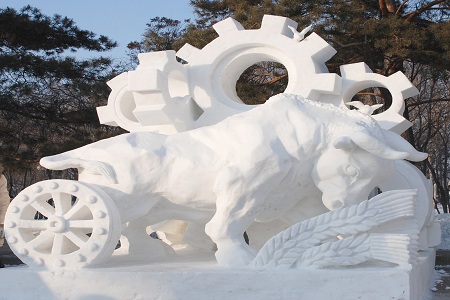
But wrapped up in layer upon layer of clothing, thousands of visitors flock here each year to see the spectacular the Ice and Snow Harbin festival, where ice and snow is exquisitely carved into elaborate sculptures.
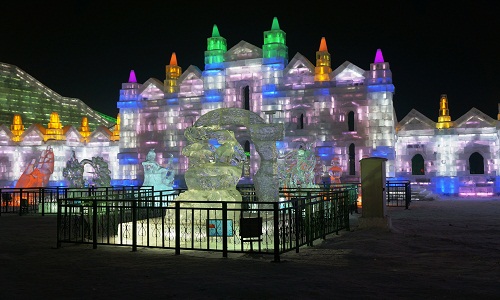
Ice and Snow World and the Ice Lantern Festival opens every December with a dramatic fireworks display over the crystalized sculptures.  On January 5, it’s formally open to the public.
The Ice and Snow Festival in Harbin, China
In recent years sculptures have included such diverse subjects as Disney fairy-tale palaces, traditional pagodas, a giant Harbin (own-brand) beer bottle and the face of Mao Zedong. The festival is beautiful during the day with the sun’s reflections, but fabulous at night when little lights, frozen inside blocks of ice, are switched on. My favourite were the sculptures which had ice slides – probably intended for children, people of all ages climb up ice steps or ladders, then whizz down them very quickly!
One rather unusual attraction is the Siberian Tiger Park, home to several of these endangered and majestic creatures. Visitors are kept safely in caged vehicles or walkways whilst the Siberian tigers and other wild beasts (including white tigers and ligers) are given live animals to eat at feeding time. The lunch-time feeding slot is not for the faint hearted as a live-lunch of chickens and calves is often on the menu.

The Ice and Snow Festival in Harbin, China
Harbin’s Russian past is still evident in places – in the architecture of Central Street (Zhongyang Dajie), with its cobbles and onion-domed buildings, in its leafy boulevards, and reportedly in the drinking habits of the locals! Perhaps the most lovely building in the city (at least among those made of stone and mortar) is St Sophia’s Cathedral. This Russian Orthodox cathedral is in the middle of a square not far from the festival, and in the midst of all the festivities provides a feeling of something permanent and ancient.
Tips:
  • Wear two of everything but make sure the outer layers are not white. With the amount of snow in the city there is a good possibility you won’t be seen.
  • If you are short of any clothes you can buy at the local supermarkets and at very low price.
  • Wear warm shoes with a good grip
  • Wrap up you camera as it freezes. Take spare battery with you.
  • Do sightseeing between 11am and 2 pm ( it’s the warmest time of the day)
  • During visit to the Ice Festival please don’t stand close to the sculpture. The ice blocks can fall down, especially if the weather is warmer.
  • Carry a flask with hot tea
  • When in the warm room do not touch radiators – they are boiling hot.
Getting there:
China Holidays’ Harbin Ice Festival 2016 tour visits not only Harbin and all its sights introduced above, but also the capital city, Beijing. Please check The Ice and Snow Festival in Harbin 2016  or phone China Holidays on 020 7487 2999 for details. Alternatively email us on sales@chinaholidays.co.uk

Wednesday, 29 October 2014

Dazu Rock Carvings

Dazu Rock Carvinsg with China Holidays
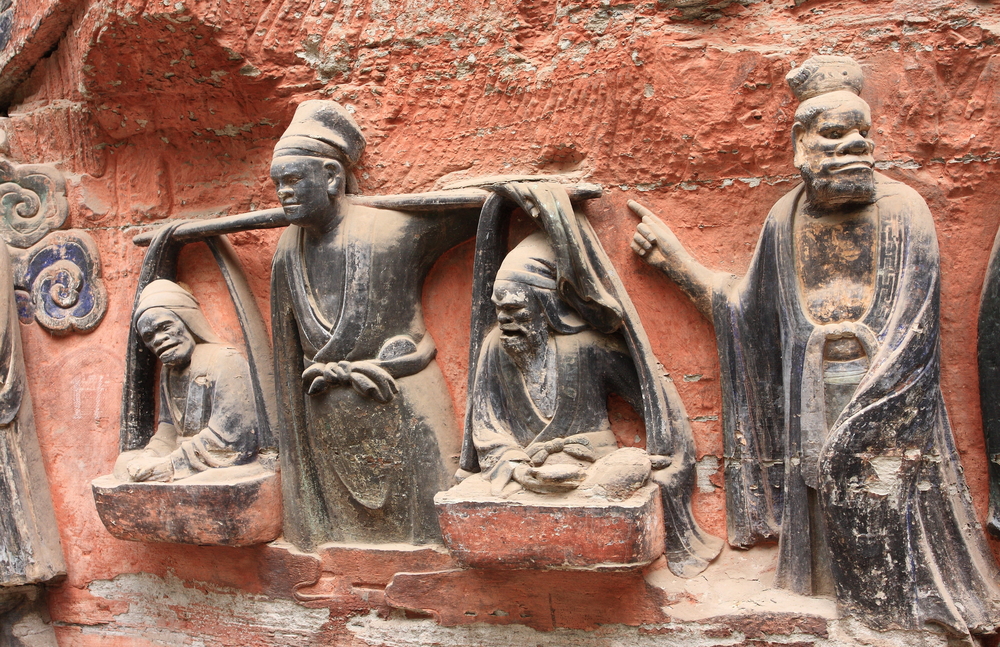
Dazu, is UNESCO World Heritage Site and home to many caves and grottoes in which are thousands of Buddha statues, most dating from between the 9th and the 13th centuries, the Tang and Song Dynasties.
The Dazu Rock Carvings and statues are scattered over some 70 sites in Chongqing’s Dazu County. They area is easily accessible by road from Chongqing ( two hours drive ) or Chengdu ( four hours drive). The statues here are stylistically different from those at Yungang Grottoes and Dunhuang Mogao Caves, both of which were much earlier projects. Dating back to the Tang and Song dynasties, the carvings at Dazu are Chinese in style, whereas earlier caves at Longmen, Dunhuang and Yungang have foreign influences. Revealing Buddhist, Taoist, and Confucian influences, the Dazu Carvings range from small, intimate statues dedicated by pious families to massive reclining Buddhas, requiring hundreds of artisans.
Although many of the statues have deteriorated over the centuries, there are a few that still remain in good condition. Expect to spend good two tours at the site itself.
China Holidays can organise independent travel to Dazu Rock Carvings or as a part of the group travel. The tour featuring visit to Dazu is The Land of Nine Dragons.  For more information please email sales@chinaholidays.co.uk or call us on 020 7487 2999 or visit our website at www.Chinaholidays.co.uk

Monday, 18 August 2014

Temple of Heaven, Beijing

Visit Beijing with China Holidays
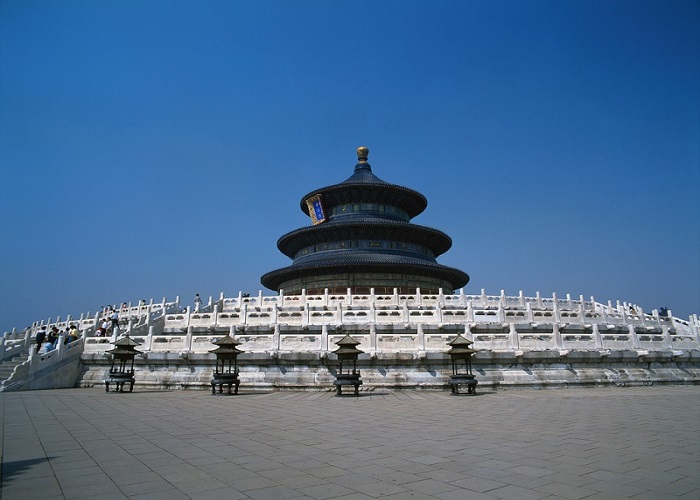
The Temple of Heaven served Ming and Qing Dynasty emperors as a vast sacred space to perform ceremonial rites. Prior to the winter solstice, the emperor would lead a solemn procession from the Forbidden City to the Temple of Heaven. At first light on the winter solstice, after a night of fasting and ritual cleansing, the emperor would offer ritual sacrifices and make a report to heaven. He would also visit on the 15th day of the first lunar month to pray for a good harvest. The temple was vitally important to the imperial universe as it was the link between the emperor and Heaven.
Temple of Heaven China HolidaysThe Temple of Heaven incorporates several religious structures, the crown jewel of which is the Hall for the Prayer of Good Harvests. The layout of the compound reflects its religious purpose and so adheres to geomantic precepts. For instance, the northern end of the park is curved while the southern end is square, reflecting the traditional Chinese conception of heaven as round and the earth as square. Likewise, the park gates are located at the four cardinal points.
The Circular Altar is the three-tiered structure closest to the southern gate. Built in 1530, the Circular Altar was where the emperor, facing north, gave heaven his report. It was acoustically designed to help the emperor’s words reach the cosmos. Indeed, the altar magnifies the voice of a speaker standing in its center, though only the speaker will hear this magnification, as sound waves bounce off the balustrades. Another interesting feature of the altar is that it was built with rows of marble slabs in multiples of the number 9, which was considered the most auspicious number. The first row has 9 slabs, the second 18, and soon.
Visit Beijing, Temple of Heaven, China HolidaysMoving northward, the next compound is the Imperial Vault of Heaven, which contained tablets of the emperor’s ancestors that were used in the solstice ceremony. The vault is surrounded by the Echo Wall, which has marvellous acoustics. Its curvature acts as a parabola allowing two people to converse in quiet voices at a great distance from each other. However, on a crowded day when every visitor attempts this experience, all you may hear is a cacophonous muddle.
Circle around the outside of the vault after exiting and proceed north through a gate to the elevated walkway. As you walk, the Hall for the Prayer of Good Harvests will rise into view. This is where the emperor prayed to heaven on behalf of his subjects. This wooden tower was erected without a single nail, it’s held in place by an ingenious system of supporting beams and massive pillars. The design is also rich in symbolism. Topped by a golden orb, its cascading roof is blue, representing the color of heaven. The four central pillars represent the seasons, the 12 inner pillars symbolize the months, and the 12 outer pillars symbolize the 12 watches of the day. Inside the hall, on the ceiling, is a single golden dragon representing the emperor. Initially constructed in 1420, the Hall was set ablaze by a bolt of lightening in 1889 and was faithfully rebuilt with lumber imported from Oregon.
Tour featuring visit to the Temple of Heaven are The Land of Nine Dragons and Panda, Palaces and Pagodas. If you wish to visit the Temple of Heaven on tailor made itinerary please email sales@chinaholidays.co.uk or call us on 020 7487 2999. Alternately visit our website at www.chinaholidays.co.uk

Friday, 31 May 2013

Mandarin – A Basic Introduction and Useful Phrases


Mandarin is the most spoken native language in the world, with over 1 billion speakers. With China’s continuous emergence on to the global scene, people from all over the world are beginning to learn this fascinating language not just for fun, but also to increase job opportunities and global insight. Whether travelling to China on holiday or for business, it is important to know a few Mandarin phrases to really appreciate your time in the Middle Kingdom.

Though the fastest growing economy in the world and a main contender on the world stage, many Chinese people can still not speak a lot of English and whilst travelling there you may have slight difficulty expressing yourself. Like the British, the Chinese have recognised the importance of their language in communication and thus have not fully emphasised and encouraged the importance of learning different languages. I however am challenging this way of thinking and am here to teach you some basic phrases to start you off on your wonderful journey that is the study of Mandarin.

When learning any language, the first phrases you usually learn are ‘hello’, ‘how are you’, ‘please’ and ‘thank you’.

·       Hello 你好: To say Hello, the Chinese say Ni Hao (pronounced ‘knee how’) Ni means You in English. Hao means good in English. So together they literally translate as ‘You Good’

·        How Are You? 你好吗?: To say how Are You?, the Chinese say Ni Hao Ma (pronounced ‘Knee How Ma). Ni and Hao mean the same as in Hello; the Ma sound makes the previous words a question. There three characters together therefore literally translates as ‘Are You Good?’

·        Please 请: To say Please, the Chinese say Qing (pronounced ‘Ching’) The word Qing means please, but can also mean to invite, e.g. invite someone to help you, or invite someone to dinner.

·        Thank you 谢谢: To say Thank You, the Chinese say Xie Xie (pronounced ‘Shia Shia’) The word Xie alone means Thank you, but to emphasise the meaning, the Chinese repeat this word to say Xie Xie.

When travelling in China, it is also important to know a few phrases which can greatly help you have a smoother trip.

How do you get somewhere _____怎么走?: To ask How to Get Somewhere, you can say ‘_______Zenme Zou?’ (pronounced ‘Zen Me Zo’). The literal translation of Zenme Zou is How do you go? To use this effectively, you can put any location or place in front of Zenme Zou to ask how to get there.
e.g Tiananmen Square Zenme Zou? - How do you get to Tiananmen Square?

Shopping is usually an important part of any tourist’s trip to China and it is important to know two phrases in relation to shopping:

           How much? 多少钱?: To say How Much?, the Chinese say DuoShao Qian? (pronounced ‘Door Show (ow as in cow) Chee-En) Duoshao means How Much, Qian means Money, so together the meaning is How Much Money?

      Can you make it a bit Cheaper 便宜一点吗?: To say Can you Make it a bit Cheaper?, the Chinese say Pianyi Yidian Ma? (pronounced  Pean Yee Yee Dee En Ma) Pianyi means Cheap, Yidian means A little and Ma is the same as in Ni Hao Ma making it a question. So, altogether the phrase literally translates as Can you make it cheaper a little?

This is the first of two parts on Chinese vocabulary and useful phrases which are helpful to any trip in China. Please look out for part two of this vocabulary extravaganza.

For any information regarding travelling in China please call on 020 7487 2999 or email us on sales@chinaholidays..com. You can visit our website at www.chinaholidays.com 

Friday, 26 April 2013

Summer Palace in Beijing (photo essay)


China Holidays, Day Tour to the Summer Palace

China Holidays, Day Tour to the Summer Palace


With its handsome buildings, pretty scenery and tumultuous history, the Summer Palace is a wonderful place to explore. The most pleasurable way to escape the crowds is to take a leisurely stroll on the willow-shaded paths and arched bridges that encircle the Kunming lake. The Summer Palace is UNESCO World Heritage Site. 

If you wish to book a day tour of the Summer Palace with English Speaking guide, car and driver please email sales@chinaholidays.com or check our website at www.ChinaHolidays.co.uk 


Thursday, 18 April 2013

What to see and do in Xian, China


China Holidays, travel to China, china travel, holidays to china


While living in China for a year, I visited Xi’an for 4 days. I liked it so much that I had to return one month later for another stay. Anyone who has heard of Xi’an probably knows it for its most famous attraction – the legendary terracotta warriors. An incredible world wonder, the warriors may be the main draw for travellers booking travel to Xi’an with China Holidays, but there is so much more to this city and region that can be overlooked.

The warriors were discovered by peasants digging a well in the 1970s, but Xi’an was famous for centuries before then as the Chinese gateway to the Silk Road, and was previously the ancient capital of Chang’an, a city that rivalled Rome and Constantinople in size and scale. Myths and legends surround the city, and the Silk Road saw settlers from far off lands settle, reflected in Xi’an’s Muslim quarter. The Muslim quarter in Xi’an is a large area of streets lined with delicious food, fine silk and quality market stalls, centred around the Great Mosque. Walking around the Great Mosque is a serene experience, and it truly reflects the blend of Chinese and Islamic cultures in the city. On the surface the Mosque looks like a traditional Chinese temple, but on closer look you will spot Arabic script carved into the stones, Confucian cloisters are in fact rooms for foot-washing, and lines of worshippers queue up on hearing the call to prayer echo through the ancient lanes of the beautiful Muslim Quarter.

china holidays, travel to china. china travel, holidays to china
The terracotta warriors are located half an hour from the city centre, on a complex featuring great exhibitions, restaurants and gift shops. To fully appreciate the warriors, try and read about their story before your visit, especially that of Qin Shihuang, the first emperor of China. There are three buildings housing the warriors, each one the size of an aircraft hangar. Before your eyes row upon row of non-identical warriors stand before you, guarding their Emperor over 2000 years after his death. The warriors have to be seen to be believed, and along with the Great Wall of China really are symbolic of what it is that makes China one of the world’s richest countries in culture.

china holidays, travel to china, china travel, holidays to china
Xi’an is a fast-developing city, with the city centre a great mix of old and new. Traffic circles the ancient Bell Tower. Walk around it after sunset and watch thousands of swallows flitting around it, as it is lit up in golden lights. At the opposite end of the city is the Drum Tower. Climb these ancient structures for great views over the city. Standing on top of them, you can imagine the sounds that would resonate across the city from them, as they marked the beginning and end of curfew in ancient times.

In the south-east of the city is the Wild Goose Pagoda area. Centred around the impressive 7th century Wild Goose Pagoda, this part of the city is popular with students at the nearby universities. Take a stroll around the Pagoda and enjoy the delightful park, full of musicians, entertainers and stalls selling snacks and street food.

For travellers interested in China’s 20th century history, the fascinating 8th Route Army Museum is tiny but packed full of interesting exhibitions. You can visit the quarters that Mao and the Communist Party stayed in and prepared for revolution in, along with an exhibition on Mr and Mrs Snow, an American couple famous in China as Mao’s contemporaries.

For more information about Xian and things to do and see in Xian or anywhere in China please email sales@Chinaholidays.com or call us on 020 7487299. Alliteratively check our website site at www.chinaholidays.co.uk 

Friday, 5 April 2013

People, Food, Daily Life in Shanghai

visit shanghai with China Holidays


A visit to China would usually incorporate trips to both Beijing and Shanghai. The differences in terms of architecture and history are at once obvious. However under the surface more and more differences are apparent, until you realise that one of the only aspects they have in common with one another is their importance to China.

What to see and do in Shanghai, China Holidays
For travellers with a basic knowledge of Chinese, the first difference is in the language itself. Shanghai is a dialect as different from Beijing’s as Cantonese. Shanghainese can be difficult to get used to for foreigners, but this gulf in dialects truly reflects the gulf between the Shanghai and Beijing’s residents. Shanghai may not be the capital of China, but its residents don’t care, because they know that they live in China’s greatest city, and will be more than willing to let you know that. This is a city full of people proud to live at the forefront of China’s economic boom, and upon visiting Shanghai you may feel that their arrogance is justified. The Communist Party itself has its headquarters in the capital Beijing, but has its roots in a Shanghai back street where they Party held its first meeting in the 1920s. The Shanghainese will admit that China’s history lies in Beijing, but its future is Shanghai.

What to see and do in Shanghai, China Holidays
Before your trip to China, you will no doubt have heard of Peking Duck, the unofficial national dish of China. But Shanghai’s cuisine is celebrated throughout China and is markedly different to the rest of the country. A prime location on the coast at the mouth of the Yangtze River gives Shanghai wonderful fresh seafood, with crabs, fish and chicken the mainstay of Shanghai cuisine. Shanghai has notably smaller, more delicate portions than the rest of the country, with care and attention focused on bringing out flavours in each dish. Sugar is a frequent feature in Shanghai cooking, from where popular sweet and sour dishes originate. A must-eat is surely Shanghai’s shengjianbao (生煎包),a fried dumpling commonly eaten for breakfast with a stick of fried dough (youtiao 油条) and soy milk. Another popular dish is the Shanghai hairy crab, caught fresh in the mouth of the Yangtze, this is a popular dish with locals available throughout the city.

What to see and do in Shanghai, China Holidays
Shanghai may be a modern metropolis, but in comparison to Beijing there are fewer obvious sights for tourists to flock to. The real pleasure of visiting in Shanghai is to find the locals, and enjoy what they do in their leisure time. Whether it be going to Fuxing Park to listen to Chinese music and singers, or to even join in with the groups of dancers (ballroom, line dancing, tango…) dotted around the park. Stroll through the many markets in the city, whether it be Dongtai Road’s antiques and curio market, or the many various animal and food markets, you are sure to spot amazing items for sale. With all of its skyscrapers and fantastic 21st century architecture, Shanghai may be a city with its head in the clouds, but the real beauty of it is at street level.

For more information regarding Holidays to China please call Tom at 020 7487 2999 or email sales@chinaholidays.com. Alternativly visit our website at www.chinaholidays.com

Thursday, 28 March 2013

What to see and do in Ningbo, China


Ningbo – the city by the sea

Just over two hours away from Shanghai is Ningbo, one of China’s largest ports. Despite not being as well-known as other Chinese cities, Ningbo is a city with its very own identity, and acts as a great hub for visiting Zhejiang Province. In 2012 Ningbo was the world’s fastest growing port, and this great rate of development has spread throughout the whole city. Tianyi Square in the centre is flanked by luxury shops and western brands, and centres around Asia’s tallest fountain. The 19th century catholic cathedral on the square may look out of place, but look inside for an interesting glimpse of Chinese Christianity, along with some beautiful murals. Wanda Plaza is a modern haven for shopping. A growing community of westerners has seen the development of Ningbo’s “bund”, the laowaitan (老外滩) which skirts along the Yong River, a great centre for nightlife and dining.

What to see and do in Ningbo, China Holidays Ningbo also has a lot to offer in the way of culture. Just five minutes away from Tianyi Square is the Tianfeng Pagoda, a 900 year old Tang Dynasty tower which offers great views of the city. One of the most popular attractions in the city is the Tianyi Ge Museum, China’s oldest private library. Set in a beautiful traditional Ming Dynasty house, the collection of Confucian works is complimented by tranquil water gardens.
Around 45 minutes on the outskirts of the city is Baoguo Temple, south China’s oldest wooden construction dating back almost 1000 years. The temple retains peace and serenity situated on a bamboo-crested hill above Ningbo, I suggest visiting on a rainy misty day for a truly memorable experience. The Temple contains various exhibitions and artefacts dating back over the centuries.

Around 1 hours’ drive (and a short ferry trip) away to the east of Ningbo is Putuoshan, located near the island city of Zhoushan. Putuoshan is one of China’s four sacred mountains, and perhaps the most unusual. The island of Putuo is truly beautiful and unexpected, a far cry from nearby Shanghai. A comfortable climate and gorgeous sandy beaches welcome both tourists and Buddhist pilgrims alike. Climb to the peak of Putuo for stunning views over Zhejiang and out to sea.

Further to the south of Ningbo towards the centre of Zhejiang is a true unknown gem. Longquan has been famous for centuries for its pottery, and is also renowned in China for sword manufacturing. Outside the town are various clay kilns open to the public, some dating back to the early Ming dynasty period. 20 minutes outside of Longquan town is Baiyun (白云瀑) Waterfall and old village. Unspoilt and unheard of by western tourists, the old village really is authentic, and the waterfall and scenery is stunning.

For more information about Ningbo please email Nick Moore, China Holidays travel advisor you used to lived in this beautiful city.  His email address is outbound2@chinaholidys.com or for tours to china check our website at www.chinaholidays.co.uk 


Monday, 18 March 2013

72 Hour Free Transit in Beijing and Shanghai


From January 1st 2013, the Chinese government has introduced a new policy that allows for tourists to transit in China for up to 72 hours without a Chinese visa. This policy was introduced in the hopes of increasing tourism into China and increasing business for not only the tourist industries in China, but also tourism industries in other countries.

With this policy, there are many rules which must be followed in order to use this service. Below, I will explain what criteria must be met in order to use this service and certain rules surrounding the policy.

Who is applicable?

In order to use the 72 hour transit without visa policy, the traveller must be a citizen of one of the 45 countries that China has allowed to use this service. These 45 countries are based on the highest tourist markets to China in 2011. For a full list of the countries please click here. 

What documents are needed?

In order to use this service you need to have already booked flight tickets and visas (if applicable) for a 3rd country. As this is a transit policy, the whole idea is that you will be travelling to a 3rd country, after you have spent up to 72 hours in China.  
e.g. Start in the UK (1st Country), travel to China (2nd Country) for up to 72 hours and then fly on to Japan (3rd Country). Before you have left the UK, you must have already purchased the documentation for the 3rd country (i.e. Japan)

Where can you travel to in China?

Currently, this policy only applies to 3 airports. These include:
1) Beijing Capital International Airport
2) Shanghai Pudong Airport
3) Shanghai Hongqiao Airport
These are the only airports you can travel into that allows you to use the 72 hour transit without visa policy. There are discussions currently about plans to expand into Guangzhou and Chengdu.

How to Apply?

When you check in at the airport of your 1st country (e.g. London Heathrow), you should inform your airline that you will be wishing to use the 72 transit without visa policy whilst you are in China. The airline will check that all of your information is in order. The airline will then present a list of people on their flight who are using the service to the Chinese border agency 边检. When you are going through customs at the airport, the Chinese border agency will have your name listed; they will check your documents (including whether you have 3rd country documentation i.e. flights/ visas) and then they will stamp your passport. When you have received a stamp, your 72 hour transit period will begin. When you leave China, you will receive a second stamp indicating that your transit period has been annulled. 

What is meant by a 3rd country?

o A 3rd country is a country you will go to after being in transit in China.
o The 3rd country flights and visas (if applicable) must be present before you travel to China
o The 3rd country cannot be the same country as the 1st country (e.g. London – Beijing – London). The 3rd country must be different.
o Hong Kong and Macau are being treated as 3rd countries in this policy, separate from Mainland China.

Rules 

o This policy only applies to Beijing and Shanghai
o Once in these cities, you cannot leave the city proper.
o You cannot enter from Beijing and depart from Shanghai (or vice versa)
o You can only enter from the airports (Beijing Capital International Airport, Shanghai Pudong Airport and Shanghai Hongqiao Airport). You cannot enter by train, car, boat or other forms of transport.

Can you extend the policy?

o In no circumstance can you extend the 72 hour transit without visa policy.
o If you wish to extend your time in China or are forced to stay in China due to unforeseeable reasons, you will need to apply for a full visa at the Ministry of Public Security
o If you wish to leave the city borders, you need to apply for a full visa also

Advantages of the 72 hour transit without visa policy

• Hassle free before departure. No need to buy and apply for a visa.
• Allows for flexibility in Beijing and Shanghai. Brings simplicity to quick business meetings or fleeting tours of Beijing or Shanghai
• Will help increase tourism in China and promote China as a holiday destination Furthermore, will bring further business to tourist companies from countries that enjoy this service.

For more information about Chinese Visas policy please email sales@chinaholidays.com or call us on 020 7487299. For more information about travelling to China please check our website at www.Chinaholidays.co.uk 

Wednesday, 30 January 2013

Come and Visit us at the Destination Travel Show and Stanfords


Intrigued in visiting China? Interested in exploring and understanding the rich and diverse culture of the Middle Kingdom? Then come down to Earls Court Exhibition Centre and Stanfords, where we, China Holidays, will be present to provide you with all the information you need for planning and creating your once in a lifetime trip to China.


From 31/01/2013 to 03/02/2013, China Holidays will be present at the Destinations: The Holiday & Travel Show, held At Earls Court Exhibition Centre (across from Earls Court Tube Station). There, China Holidays will have its very own booth, where customers can come and enquire about planning a trip to China. Get the chance to meet China Holidays staff in person, and discuss with them exactly what you want and wish for in a trip to China. Furthermore, China Holidays is able to offer you free tickets to the exhibition. Please just give our office a call or send an email enquiring for tickets, and our staff present at the exhibition will be able to give you your tickets at the entrance to the Earls Court Exhibition Centre.

From 01/02/2013 to 28/02/2013, China Holidays in co operation with China National tourist Office, Hong Kong Tourism Board and Changjiang Cruises will have its very own stall set up in Stanfords travel bookshop, 12-14 Long Acre, Covent Garden, London, for the entire month, allowing for current and potential customers to come and enquire about their dream vacation to China. Feel free to come down and chat with our Chinese experts, made up of both native Chinese and foreign fanatics, who will be able to advise and inform you on all the country has to offer.

With China Holidays, we provide fixed itinerary group tours which are found in our China Holidays brochure, as well as giving you the opportunity to plan and design your own tour of China, to fit your needs and wishes. Come take a look at our many itineraries, offering a wide range of choice. Been to China’s major tourist spots before? No problem! As well as offering tours of China’s main sights, China Holidays offers our customers the choice to go off the beaten track and visit those sights that are mainly foreign to tourists, despite their wonder and uniqueness. Set on seeing specific sights in China? Fantastic! China Holidays can help you arrange your own personal tour, helping get you the best rates and experience available.

To celebrate a year of Snake whilst at Stanfords, China Holidays in co operation with China National tourist Office, Hong Kong Tourism Board and Changjiang Cruiseswill be giving a speech and the chance to ask questions on China and our company every Thursday from 6:00pm onwards; it would be great to see all of you there! Furthermore, we will be holding a competition draw throughout the month, allowing one lucky customer the chance to win a cruise on the Yangtze River, travelling in style on one of Changjiang’s luxurious cruise liners. In order to enter this draw, simply come down to Stanfords and fill in one of our forms with your details. The results will be announced at the end of the month.
We would like to take this opportunity to thank you friends from China national tourist Office and Hong Kong Tourism Board for all the help and support!


We at China Holidays urge you to come see us at Stanfords this February, and start planning your amazing trip to one of the most upcoming and exciting countries in the world. Make 2013, the year of the snake, your year to visit China.

Monday, 13 August 2012

#ChinaHolidaysChat on Twitter!


Tomorrow, the 14th August 2012 at 1400 GMT we are going to talk about Festivals in China.

To join us, just add the #ChinaHolidaysChat hashtag to your Tweet to be included in the conversation.
Please tweet your questions and we will answer them!

Connect with ChinaHolidays on Twitter for best 
information about travelling to China.


Friday, 6 July 2012

Canton Trade Fair in Guangzhou


In 1957 one of China’s most vital and well-known trading ports held its first annual trade fair. This soon grew to become the massive, renowned Canton Trade Fair, now exhibiting a stunning range of products by exhibitors with diverse backgrounds and areas of expertise.  It is held twice a year every spring and autumn. Buyers from businesses as diverse as hardware and tools, textiles and garments, and food – to name but a few – can explore the huge range of goods on offer.

Each year over 200, 000 international buyers and around 300, 000 Chinese exhibitors visit the fair, and rates for a booth start from US$3500.

It is one of the biggest fairs in the world, with an exhibition space of over 1 million square metres – whatever your area of business, chances are the Canton Fair will have suppliers to match. Occupying such a large area, it is crucial that potential buyers research which stalls match their specific need.

The fair is so big that it is divided up into three phases.

Phase 1, from October 15th – 19th, is for Electronics and Household, Electrical Appliances, Lighting Equipment, Vehicles and Spare Parts, Machinery, Hardware and Tools, Building Materials, and Chemical Products. There is also an International Pavilion for International Exhibitors in these fields.

Phase 2 is from October 23rd till October 27th, and highlights Consumer Goods, Gifts, and Home Decorations.

Phase 3, from October 31st till November 4th, is for those interested in Textiles and Garments, Shoes, Office Supplies, Cases and Bags, and Recreation Products, Medicines, Medical Devices and Health Products, and Food. Again, there is an International Pavilion for International Exhibitors.
The fair showcases an incredible range and number of products in each industry, from innovative new designs to familiar classics. Each vendor brings in samples of their product, so you can have the chance to assess their style and quality. If you have a product that you have designed yourself, you can also bring along a sample or pictures, and find a suitable producer.

Many international companies believe that language and cultural barriers present an obstacle to success in business in China. At the Canton Fair, interpreters are provided at affordable rates, or you can apply to bring along your own interpreter. Factory owners themselves have made vast improvements in their basic English skills since the Fair was established.

If your company is interested in doing business in China, it is important never to underestimate the value given in East Asia to interpersonal relationships. Having the chance to meet potential business partners in person can do wonders for a business relationship, and can build trust and facilitate communication.  Factory owners and suppliers in China are much more likely to respond to a face-to-face approach rather than a cold email or phone call. And even if you don’t find a suitable business partner, starting to build a network of contacts will be essential groundwork for any future projects in the area.

For more information on the Canton Trade Fair, please see http://www.cantonfair.org.cn/en/. For comprehensive information on how China Holidays can help with your travel arrangements to the Canton Fair, call China Holidays’ friendly team of expert advisors on 020 7487 2999, or contact us by email on sales@chinaholidays.com. 

A trip to Guangzhou doesn’t have to be all work and no play. China Holidays can arrange tours to attractions such as the two thousand year-old Nan Yue Tomb, and enchanting cruises along the Pearl River, which for so long was the West’s gateway into the unknown world of China. The city’s modern metro system makes it an easy place to unwind and explore. Prices for food and transportation are considerably cheaper than in neighbouring Hong Kong.

Food plays a key role in the social life of the city, both for locals and for visitors on holidays to China. Guangzhou has a multitude of international restaurants, and the local cuisine, such as fresh fish steamed with spring onion and ginger, and fragrant chicken, is deservedly famous. Much of what we in the UK consider traditional Chinese food originated in the Guangdong/Hong Kong region, and was brought over by the first wave of Chinese immigrants. British travellers will feel at home with many of the Cantonese specialities, such as delicately-flavoured dim-sum, made with local expertise honed by generation after generation of skilled family chefs.

The cultural heart of Guangzhou lies in the traditional centre of the city. Locals are by-and-large welcoming and friendly, older residents relaxing, or playing a slow-paced game of badminton in the relative heat (temperatures ranging from 18-23 degrees Celsius in October).

China Holidays have long-established relationships with Guangzhou’s multitude of five-star hotels, all of which cater for a range of guests with diverse business needs, at competitive prices. These hotels usually offer a free shuttle bus service to and from the Canton Trade Fair.

Guangzhou is also a two hour train ride from the bustling, fashionable, metropolis of Hong Kong, home to some of the most sophisticated wining and dining in the world, and an essential stop on any comprehensive tour of the Far East.  

You can fly with China Southern direct from London Heathrowto Guangzhou, or you can fly with airlines such as British Airways and Cathay Pacific to Hong Kong and take the train from there, taking advantage of the opportunity to visit two of East Asia’s most historically important and interesting cities.

China Holidays, one of the longest established tour operators in UK can organise any day tours, hotel accommodation and transfers in Guangzhou. For more information please click here.