Showing posts with label holidays to china. Show all posts

Thursday, 12 February 2015

The Ice and Snow Festival Travel Tips

The Ice and Snow Festival in Harbin, China
The city of Harbin, formerly colonised by the Russians, lies in the North-Eastern tip of China – at this time of year, frozen at temperatures below 25 degrees Celsius.
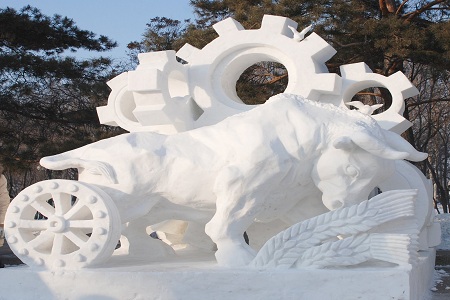
But wrapped up in layer upon layer of clothing, thousands of visitors flock here each year to see the spectacular the Ice and Snow Harbin festival, where ice and snow is exquisitely carved into elaborate sculptures.
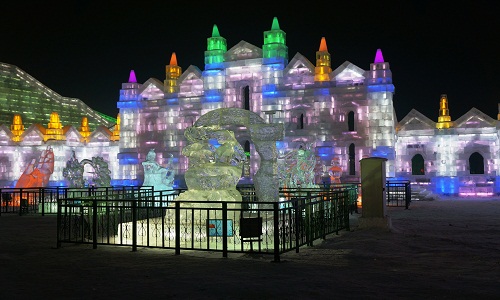
Ice and Snow World and the Ice Lantern Festival opens every December with a dramatic fireworks display over the crystalized sculptures.  On January 5, it’s formally open to the public.
The Ice and Snow Festival in Harbin, China
In recent years sculptures have included such diverse subjects as Disney fairy-tale palaces, traditional pagodas, a giant Harbin (own-brand) beer bottle and the face of Mao Zedong. The festival is beautiful during the day with the sun’s reflections, but fabulous at night when little lights, frozen inside blocks of ice, are switched on. My favourite were the sculptures which had ice slides – probably intended for children, people of all ages climb up ice steps or ladders, then whizz down them very quickly!
One rather unusual attraction is the Siberian Tiger Park, home to several of these endangered and majestic creatures. Visitors are kept safely in caged vehicles or walkways whilst the Siberian tigers and other wild beasts (including white tigers and ligers) are given live animals to eat at feeding time. The lunch-time feeding slot is not for the faint hearted as a live-lunch of chickens and calves is often on the menu.

The Ice and Snow Festival in Harbin, China
Harbin’s Russian past is still evident in places – in the architecture of Central Street (Zhongyang Dajie), with its cobbles and onion-domed buildings, in its leafy boulevards, and reportedly in the drinking habits of the locals! Perhaps the most lovely building in the city (at least among those made of stone and mortar) is St Sophia’s Cathedral. This Russian Orthodox cathedral is in the middle of a square not far from the festival, and in the midst of all the festivities provides a feeling of something permanent and ancient.
Tips:
  • Wear two of everything but make sure the outer layers are not white. With the amount of snow in the city there is a good possibility you won’t be seen.
  • If you are short of any clothes you can buy at the local supermarkets and at very low price.
  • Wear warm shoes with a good grip
  • Wrap up you camera as it freezes. Take spare battery with you.
  • Do sightseeing between 11am and 2 pm ( it’s the warmest time of the day)
  • During visit to the Ice Festival please don’t stand close to the sculpture. The ice blocks can fall down, especially if the weather is warmer.
  • Carry a flask with hot tea
  • When in the warm room do not touch radiators – they are boiling hot.
Getting there:
China Holidays’ Harbin Ice Festival 2016 tour visits not only Harbin and all its sights introduced above, but also the capital city, Beijing. Please check The Ice and Snow Festival in Harbin 2016  or phone China Holidays on 020 7487 2999 for details. Alternatively email us on sales@chinaholidays.co.uk

Wednesday, 29 October 2014

Dazu Rock Carvings

Dazu Rock Carvinsg with China Holidays
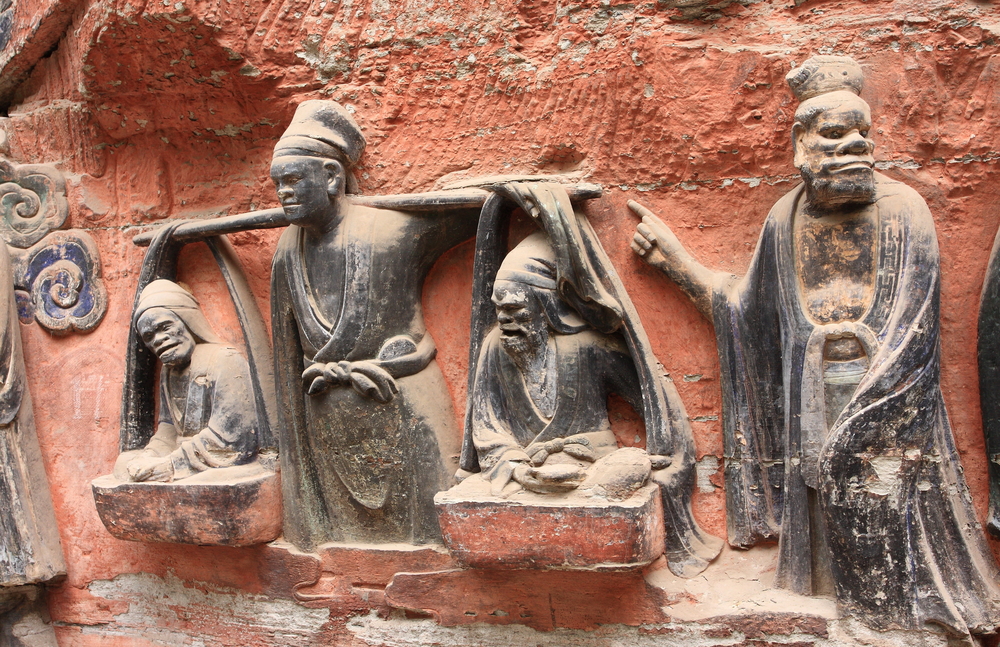
Dazu, is UNESCO World Heritage Site and home to many caves and grottoes in which are thousands of Buddha statues, most dating from between the 9th and the 13th centuries, the Tang and Song Dynasties.
The Dazu Rock Carvings and statues are scattered over some 70 sites in Chongqing’s Dazu County. They area is easily accessible by road from Chongqing ( two hours drive ) or Chengdu ( four hours drive). The statues here are stylistically different from those at Yungang Grottoes and Dunhuang Mogao Caves, both of which were much earlier projects. Dating back to the Tang and Song dynasties, the carvings at Dazu are Chinese in style, whereas earlier caves at Longmen, Dunhuang and Yungang have foreign influences. Revealing Buddhist, Taoist, and Confucian influences, the Dazu Carvings range from small, intimate statues dedicated by pious families to massive reclining Buddhas, requiring hundreds of artisans.
Although many of the statues have deteriorated over the centuries, there are a few that still remain in good condition. Expect to spend good two tours at the site itself.
China Holidays can organise independent travel to Dazu Rock Carvings or as a part of the group travel. The tour featuring visit to Dazu is The Land of Nine Dragons.  For more information please email sales@chinaholidays.co.uk or call us on 020 7487 2999 or visit our website at www.Chinaholidays.co.uk

Monday, 18 August 2014

Temple of Heaven, Beijing

Visit Beijing with China Holidays
The Temple of Heaven served Ming and Qing Dynasty emperors as a vast sacred space to perform ceremonial rites. Prior to the winter solstice, the emperor would lead a solemn procession from the Forbidden City to the Temple of Heaven. At first light on the winter solstice, after a night of fasting and ritual cleansing, the emperor would offer ritual sacrifices and make a report to heaven. He would also visit on the 15th day of the first lunar month to pray for a good harvest. The temple was vitally important to the imperial universe as it was the link between the emperor and Heaven.
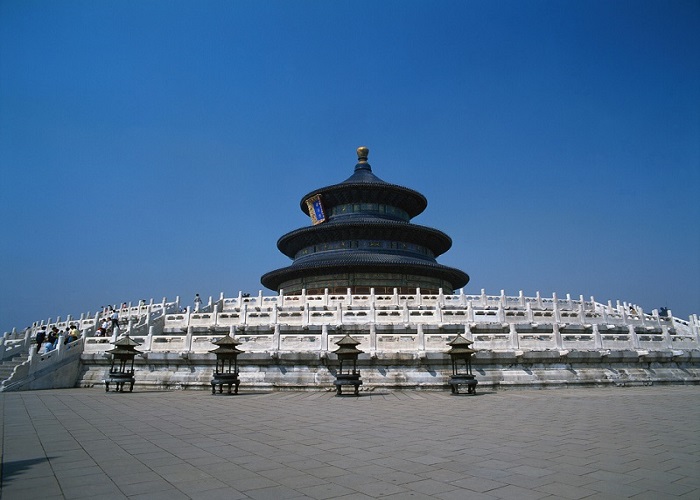
Temple of Heaven China HolidaysThe Temple of Heaven incorporates several religious structures, the crown jewel of which is the Hall for the Prayer of Good Harvests. The layout of the compound reflects its religious purpose and so adheres to geomantic precepts. For instance, the northern end of the park is curved while the southern end is square, reflecting the traditional Chinese conception of heaven as round and the earth as square. Likewise, the park gates are located at the four cardinal points.
The Circular Altar is the three-tiered structure closest to the southern gate. Built in 1530, the Circular Altar was where the emperor, facing north, gave heaven his report. It was acoustically designed to help the emperor’s words reach the cosmos. Indeed, the altar magnifies the voice of a speaker standing in its center, though only the speaker will hear this magnification, as sound waves bounce off the balustrades. Another interesting feature of the altar is that it was built with rows of marble slabs in multiples of the number 9, which was considered the most auspicious number. The first row has 9 slabs, the second 18, and soon.
Visit Beijing, Temple of Heaven, China HolidaysMoving northward, the next compound is the Imperial Vault of Heaven, which contained tablets of the emperor’s ancestors that were used in the solstice ceremony. The vault is surrounded by the Echo Wall, which has marvellous acoustics. Its curvature acts as a parabola allowing two people to converse in quiet voices at a great distance from each other. However, on a crowded day when every visitor attempts this experience, all you may hear is a cacophonous muddle.
Circle around the outside of the vault after exiting and proceed north through a gate to the elevated walkway. As you walk, the Hall for the Prayer of Good Harvests will rise into view. This is where the emperor prayed to heaven on behalf of his subjects. This wooden tower was erected without a single nail, it’s held in place by an ingenious system of supporting beams and massive pillars. The design is also rich in symbolism. Topped by a golden orb, its cascading roof is blue, representing the color of heaven. The four central pillars represent the seasons, the 12 inner pillars symbolize the months, and the 12 outer pillars symbolize the 12 watches of the day. Inside the hall, on the ceiling, is a single golden dragon representing the emperor. Initially constructed in 1420, the Hall was set ablaze by a bolt of lightening in 1889 and was faithfully rebuilt with lumber imported from Oregon.
Tour featuring visit to the Temple of Heaven are The Land of Nine Dragons and Panda, Palaces and Pagodas. If you wish to visit the Temple of Heaven on tailor made itinerary please email sales@chinaholidays.co.uk or call us on 020 7487 2999. Alternately visit our website at www.chinaholidays.co.uk

Thursday, 6 February 2014

10 Travel Tips for China

When travelling to China, it is key to understand a bit about local culture and way of life. When travelling to China it is important that those who are visiting the Middle Kingdom have accustomed themselves with the below 10 tips recommended by China Holidays.

1. Obtaining a Chinese Visa
When travelling to China, it is required by law that all non-Chinese citizens require a Chinese visa in order to enter the country. For UK citizens travelling to China as a tourist, it is mandatory to receive an L Visa. One can apply for an L Visa at a Chinese Visa Centre in London, Manchester or Edinburgh; applicants can also apply for an L Visa via post. When applying for a Chinese visa, an applicant will need a passport with 6 months validity; a filled out visa application form (which you can require online from the official China Visa Centre website); a passport sized photo; a photocopy of your passport photo pages and a photocopy of your last Chinese visa (if applicable). A citizen of the UK, when applying for travel, can apply for a single entry or a multiple entry visa. Applicants can stay in China for a maximum of 30 days each time. For more information how to obtain Chinese Visa please check our dedicated site: http://www.chinese-visas.co.uk

2. Picking the best time to travel to China
Unlike the UK, China is a country that has extreme temperature differences depending on the season. Winter in China is extremely cold, with some northern areas reaches lows of -30 degrees Celsius; summer can reach extremely uncomfortable highs, for example in Hong Kong, to such degrees as 32 Degrees. The best time to travel to China is during spring and autumn, as the temperature during this period is extremely pleasant and has a nice cool feeling to it. The sky is usually much clearer during these periods too, giving China Holidays’ guests perfect photo opportunities. It is important however to avoid the first week in May and the first week in October, as these are national holidays in China and the country gets too busy to enjoy as a tourist.

3. Electricity in China
The electricity voltage in China is generally 220V. Therefore, adaptors are required to use your electrical appliances in China. The majority of hotels will sell adaptors for around 100-200 Yuan. Around the hotel, there are 220V and 110V electric sockets; however, in most hotel rooms the electric sockets are 220V.

4. Food in China
Although I personally adore Chinese food, it is not to every Westerners taste and sometimes meals in China can be quite trying and unpleasant. Chinese food in China does not really taste like that in the UK, so some tourists may be surprised. However, there is no need to worry. In most 4* hotels in the major cities such as Beijing and Shanghai, there will be a western option for both breakfast and dinner. Throughout the majority of modern cities in China, there is also the option of fast food outlets, such as McDonalds, KFC and Subway. It must be noted though that in remoter areas, such as Tibet and Yunnan Province, there will be only a Chinese option most likely available

5. Tipping in China
Although it is not mandatory to tip in China, we at China Holidays advise our clients each to tip around RMB30-40 for the driver and tour guide. A tip of RMB150 is a mandatory requirement on Cruise liners on the Yangtze River and will be collected on boarding the ship. In high end restaurants, a small tip would be polite and a sign of respect to the waiter. In smaller, more local restaurants, a tip is not expected ever and waiters will usually attempt to return a tip to you if you try to give them one.

6. Injections
Before travelling abroad, one should always check with their GP and see what they recommend. We at China Holidays recommend getting vaccinations for typhoid, hepatitis A, tetanus and polio. Make sure you check with your GP which areas are seen as malaria warning zones. Areas in south China such as Yunnan and Hainan Island are usually susceptible to malaria so please check with your GP before travelling. For high altitude areas such as Tibet, take some ginger biscuits to assist with altitude sickness.

7. Money
The currency in China is called the Yuan or Kuai. One pound is roughly equal to 9.5/10 Yuan. You can change your money in the UK before you leave, or you can change your money at the airport on arrival into China. Furthermore, some higher end hotels have a currency exchange which does not charge commission. Our tour guides can also assist you in changing money at the bank.

8. Water
China Holidays highly recommends not drinking tap water in China as it may be contaminated. Buy bottled water instead from your hotel or from a supermarket. When buying bottled water, please make sure that the cap and seal are unbroken as it may happen that the bottle has been refilled with tap water.

9. Toilet Facilities
Toilet facilities at major tourist sights and hotels are of a high standard. However, outside of these areas toilets are of an extremely low standard and are usually squat toilets with little privacy and cleanliness. Always remember to bring toilet roll with you when you leave your hotel.

10. Tea and coffee
One of the most important facilities for any Brit travelling abroad is the availability of tea and coffee. In most hotels, Chinese tea and coffee are provided. However, real English tea is difficult to come by so it is best for you to bring it yourself from the UK. Most hotels will provide a kettle in your room. If you do not have one, please ask at reception and they will provide you with one.

For more information about travelling to China please email sales@chinaholidays.com or call us on 020 7487 2999. Alternatively visit our website www.ChinaHolidays.co.uk

Tuesday, 14 January 2014

China: Skyscraper culture reaches its peak

In the last 10 years of China’s history, there has been a mass increase in the number of skyscrapers in China’s major cities and financial hubs. This phenomenon has allowed for a number of cities in the Middle Kingdom to resemble cities such as New York and Frankfurt, and has become a distinct image of how China’s position as an economic power is growing and has become a country that’s development is relentless. Below, I will give a brief introduction to a few of the tallest buildings in China and show how a visit to these magnificent buildings can be simply fitted in to a China Holidays’ itinerary.

When thinking of Chinese skylines, most people will automatically think of the postcard image of the Shanghai Pudong skyline which sits on the banks of the majestic Huangpu River. The Pudong skyline is home to not only the tallest building in China, but also home to some of the most iconic buildings in Eastern Asia. The tallest building in China is the Shanghai World Financial Centre which was completed in 2008.
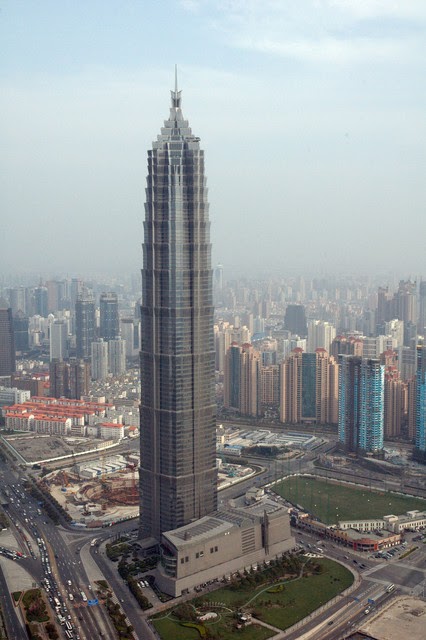
Jin Mao Tower
This towering skyscraper is made up of shopping centres, apartments and the Park Hyatt, Shanghai hotel. There is also a viewing deck at the top of the building which offers panoramic views of the city. The most distinct architectural component of the tower is the trapezoid aperture at the top of the tower which was designed to control wind pressure.

The World Financial Centre is located next to the Jin Mao Tower which was the previous tallest building in the PRC. Like the Petronas Towers in Malaysia, the Jin Mao tower has a distinct architectural style which mimics the tiered model of the majority of Asian pagodas. Though not as tall as the previously mentioned skyscrapers, one of the most iconic buildings in Shanghai, the Oriental Pearl Tower, which still stands at a whopping 470M, stands amongst Pudong’s other skyscrapers and really adds distinction to Shanghai’s spectacular skyline.

China Holidays can offer tours to the Pudong section of Shanghai and organise for our clients to tour inside these towers. Furthermore, China Holidays’ clients can enjoy the view of the skyline from across the Huangpu River on the world-renowned Bund.

Outside of Mainland China, both Taiwan and Hong Kong offer prime examples of Chinese skyscraper artistry. The Taipei 101 tower in Taipei is the tallest building in Taiwan standing at a mighty 510M. The Taipei 101, like the Jinmao Tower, was previously the official tallest building in the world until 2004. Like the Jinmao Tower further, the Taipei 101 has adopted the Pagoda trend into its architectural style and designed the building to be protected against typhoons and earthquakes which are prominent in Taiwan. In July 2011, the Taipei 101 was awarded certificate in its energy efficiency, and was named the tallest green building in the world.

The Hong Kong skyline is as famous as the Shanghai skyline and has been expanded throughout the second half of the 20th century. One of the most famous structures in Hong Kong is the Bank of China Tower which is located on Hong Kong Island. The structure of the building is supposed to represent growing bamboo shoots, which is a symbol in Chinese culture of prosperity and longevity. Like many buildings throughout China, the structure and architectural style of the Bank of China Tower applies the ancient Chinese philosophy of Fengshui, which brings peace and prosperity to its structures.

The Hong Kong skyline now brings in many additional tourists through its nightly ‘A Symphony of Lights’ show which sees many buildings lighting up to timed music. This show has been added to the Guinness Book of World Records as the largest permanent light and sound show in the world.

If you are interested in seeing the Taipei 101 tower in Taiwan, why not check out China Holidays’ ‘Taiwan’ Tour which covers an extensive visit of the unique island. Many of our tours at China Holidays offer extensions to Hong Kong and it is easy no matter where you are in Central Hong Kong to see the city’s immense skyline.

Skyscraper culture in China is on the increase all the time with more and more apartments, hotels, shopping areas and offices being built every day. Shanghai will continue to lead in height with the addition of the new Shanghai Tower which will be completed by 2014 and stand at a height of 632M.

For more information about travelling in China please call China Holidays on 020 7487 2999 or email us on sales@chinaholidays.com. Alternatively check our website on www.chinaholidays.co.uk

Tuesday, 3 December 2013

Best Evening Shows in China

China is famous for its evening shows which take part every night of the year and exemplify a rich and historical part of China’s culture. Evening shows are a major aspect of China Holidays’ itineraries. China Holidays’ most popular shows include the Legend of Kung Fu show and Peking Opera shows, both in Beijing; the Chinese Variety Art shows in Shanghai; the San Jie Liu Water and Light Show in Yangshuo; and the Face Changing Opera in Chengdu. Below, there is a description of these fantastic shows and describe the rich culture present in them.

Kung Fu is one of the most famous images of China to the western world and became extremely popular in the 70s and 80s both in the UK and the USA through world renowned stars such as Bruce Lee and Jackie Chan. Kung Fu is a number of fighting styles developed over the centuries in China, distinguished by certain traits, such as animal mimicry, inspiration from Chinese philosophers and religious influence. A main element in Kung Fu is Qi (natural energy). Kung Fu was created to discover ways of controlling one’s Qi which if controlled, is believed to maintain stability and longevity. Qi is sad to also be able to work as treatment for sickness and tension. The Legend of Kung Fu show takes place two times every day at the Red Theatre in Beijing. The majority of China Holidays’ itineraries include a visit to the Legend of Kung Fu show and are well received by our clients.

Chinese Variety Art has existed in China since the Western Han Dynasty period and was usually a performance during village harvest festivals. During the Tang Dynasty, which is seen as the Age of Enlightenment, acrobatics developed further with performances being made in the palace courts for the Emperors. The popularity of Chinese Variety Arts has continued to gain popularity since then and is now a popular art form throughout the country. Thought acrobatics is the most popular art form in these shows, other aspects include plate spinning, fire eating, tightrope walking, contortion acrobatics and lion dances. Shanghai is famous for its Variety Shows, especially acrobatics shows. In China Holidays’ itineraries which include a trip to Shanghai, an acrobatics show is always a must.

The San Jie Liu Water and Light show in Yangshuo is one of the most thrilling and highly-anticipated forms of entertainment now present in China. The San Jie Liu show is a seven part story on the banks of the Li River in Yangshuo. The show is an example of a Son et Lumiere show; a show that uses lights and sounds in an outdoor space to create a dramatic atmosphere and tone to a show. The San Jiu Liu show was directed by Zhang Yimou, who is most famous for directing the Opening Ceremony of the Beijing Olympics, which received worldwide acclaim. China Holidays greatly recommends a visit to the San Jie Liu Show and guarantee you will not be disappointed.

The Face Changing show is part of the Sichuan Opera which has been in existence for thousands of years. Face Changing is exactly as it sounds and includes actors changing their face masks in a flash, either covering their face for a split second with their hand, fan or moving their head, to change their mask without the audience seeing. The secret on how to change the mask is a secret passed down between families and has been a secret kept predominantly in China. There are four ways of Face Changing; these are known as: Blowing Dust, Beard Manipulation, Pulling-Down Masks and Face Dragging. Any China Holidays itinerary that includes a visit to Chengdu, home of the Giant Pandas, will include a visit to watch the mysterious Face Changing Show.

There are many types of show in China, many with a great historical and cultural significance. China Holidays is happy to state that evening shows are included in the majority of our tours, especially if visiting Beijing, Shanghai, Yangshuo or Chengdu.

If you are interested in visiting an evening show, China Holidays would be more than happy to assist you in creating an itinerary that included these shows. Please call us on 020 7487 2999 or email us on sales@chinaholidays.com

Friday, 31 May 2013

Mandarin – A Basic Introduction and Useful Phrases


Mandarin is the most spoken native language in the world, with over 1 billion speakers. With China’s continuous emergence on to the global scene, people from all over the world are beginning to learn this fascinating language not just for fun, but also to increase job opportunities and global insight. Whether travelling to China on holiday or for business, it is important to know a few Mandarin phrases to really appreciate your time in the Middle Kingdom.

Though the fastest growing economy in the world and a main contender on the world stage, many Chinese people can still not speak a lot of English and whilst travelling there you may have slight difficulty expressing yourself. Like the British, the Chinese have recognised the importance of their language in communication and thus have not fully emphasised and encouraged the importance of learning different languages. I however am challenging this way of thinking and am here to teach you some basic phrases to start you off on your wonderful journey that is the study of Mandarin.

When learning any language, the first phrases you usually learn are ‘hello’, ‘how are you’, ‘please’ and ‘thank you’.

·       Hello 你好: To say Hello, the Chinese say Ni Hao (pronounced ‘knee how’) Ni means You in English. Hao means good in English. So together they literally translate as ‘You Good’

·        How Are You? 你好吗?: To say how Are You?, the Chinese say Ni Hao Ma (pronounced ‘Knee How Ma). Ni and Hao mean the same as in Hello; the Ma sound makes the previous words a question. There three characters together therefore literally translates as ‘Are You Good?’

·        Please : To say Please, the Chinese say Qing (pronounced ‘Ching’) The word Qing means please, but can also mean to invite, e.g. invite someone to help you, or invite someone to dinner.

·        Thank you 谢谢: To say Thank You, the Chinese say Xie Xie (pronounced ‘Shia Shia’) The word Xie alone means Thank you, but to emphasise the meaning, the Chinese repeat this word to say Xie Xie.

When travelling in China, it is also important to know a few phrases which can greatly help you have a smoother trip.

How do you get somewhere _____怎么走?: To ask How to Get Somewhere, you can say ‘_______Zenme Zou?’ (pronounced ‘Zen Me Zo’). The literal translation of Zenme Zou is How do you go? To use this effectively, you can put any location or place in front of Zenme Zou to ask how to get there.
e.g Tiananmen Square Zenme Zou - How do you get to Tiananmen Square?

Shopping is usually an important part of any tourist’s trip to China and it is important to know two phrases in relation to shopping:

           How much? 多少钱?: To say How Much?, the Chinese say DuoShao Qian? (pronounced ‘Door Show (ow as in cow) Chee-En) Duoshao means How Much, Qian means Money, so together the meaning is How Much Money?

      Can you make it a bit Cheaper 便宜一点吗?: To say Can you Make it a bit Cheaper?, the Chinese say Pianyi Yidian Ma? (pronounced  Pean Yee Yee Dee En Ma) Pianyi means Cheap, Yidian means A little and Ma is the same as in Ni Hao Ma making it a question. So, altogether the phrase literally translates as Can you make it cheaper a little?

This is the first of two parts on Chinese vocabulary and useful phrases which are helpful to any trip in China. Please look out for part two of this vocabulary extravaganza.

For any information regarding travelling in China please call on 020 7487 2999 or email us on sales@chinaholidays..com. You can visit our website at www.chinaholidays.com 

Thursday, 18 April 2013

What to see and do in Xian, China


China Holidays, travel to China, china travel, holidays to china


While living in China for a year, I visited Xi’an for 4 days. I liked it so much that I had to return one month later for another stay. Anyone who has heard of Xi’an probably knows it for its most famous attraction – the legendary terracotta warriors. An incredible world wonder, the warriors may be the main draw for travellers booking travel to Xi’an with China Holidays, but there is so much more to this city and region that can be overlooked.

The warriors were discovered by peasants digging a well in the 1970s, but Xi’an was famous for centuries before then as the Chinese gateway to the Silk Road, and was previously the ancient capital of Chang’an, a city that rivalled Rome and Constantinople in size and scale. Myths and legends surround the city, and the Silk Road saw settlers from far off lands settle, reflected in Xi’an’s Muslim quarter. The Muslim quarter in Xi’an is a large area of streets lined with delicious food, fine silk and quality market stalls, centred around the Great Mosque. Walking around the Great Mosque is a serene experience, and it truly reflects the blend of Chinese and Islamic cultures in the city. On the surface the Mosque looks like a traditional Chinese temple, but on closer look you will spot Arabic script carved into the stones, Confucian cloisters are in fact rooms for foot-washing, and lines of worshippers queue up on hearing the call to prayer echo through the ancient lanes of the beautiful Muslim Quarter.

china holidays, travel to china. china travel, holidays to china
The terracotta warriors are located half an hour from the city centre, on a complex featuring great exhibitions, restaurants and gift shops. To fully appreciate the warriors, try and read about their story before your visit, especially that of Qin Shihuang, the first emperor of China. There are three buildings housing the warriors, each one the size of an aircraft hangar. Before your eyes row upon row of non-identical warriors stand before you, guarding their Emperor over 2000 years after his death. The warriors have to be seen to be believed, and along with the Great Wall of China really are symbolic of what it is that makes China one of the world’s richest countries in culture.

china holidays, travel to china, china travel, holidays to china
Xi’an is a fast-developing city, with the city centre a great mix of old and new. Traffic circles the ancient Bell Tower. Walk around it after sunset and watch thousands of swallows flitting around it, as it is lit up in golden lights. At the opposite end of the city is the Drum Tower. Climb these ancient structures for great views over the city. Standing on top of them, you can imagine the sounds that would resonate across the city from them, as they marked the beginning and end of curfew in ancient times.

In the south-east of the city is the Wild Goose Pagoda area. Centred around the impressive 7th century Wild Goose Pagoda, this part of the city is popular with students at the nearby universities. Take a stroll around the Pagoda and enjoy the delightful park, full of musicians, entertainers and stalls selling snacks and street food.

For travellers interested in China’s 20th century history, the fascinating 8th Route Army Museum is tiny but packed full of interesting exhibitions. You can visit the quarters that Mao and the Communist Party stayed in and prepared for revolution in, along with an exhibition on Mr and Mrs Snow, an American couple famous in China as Mao’s contemporaries.

For more information about Xian and things to do and see in Xian or anywhere in China please email sales@Chinaholidays.com or call us on 020 7487299. Alliteratively check our website site at www.chinaholidays.co.uk 

Thursday, 4 April 2013

Shanghai’s Architecture


Things to see and do in Shanghai, China Holidays

Shanghai has been described in modern times as the ‘hip’ sister of Beijing and the ‘cosmopolitan’ aunt of Hong Kong, and it is not difficult to see why. Shanghai is bursting with energy, consumed by modernity and exploding with life, diversity and international status. Shanghai sits firmly as a leading economic and financial zone and has been a city of debate of whether China should claim her as the capital over Beijing. Originally a small fishing village, Shanghai has grown and continues to grow into a metropolis hub at a speed that has never been seen before.

What to see and do in Shanghai, China Holidays
Shanghai is automatically recognised the world over for its skyline, geographical location and its wide spectrum of architectural styles. Starting at the Huangpu river, a tributary of the Yangtze which splits the city into the Pudong (East of the Huangpu) and Puxi (west of the Huangpu) sections, all the above features of the city are automatically on display. The Shanghai skyline on the banks of the Huangpu river is exploding with colour, diversity and individuality. On the opposite side of the majestic river which is inhabited by cruise ships, fishing boats and tourists, you will see the European style Bund, a feature of Shanghai that has survived since the early 20th century and deliciously accentuates the diverse nature of the city’s centre.

Shanghai’s European influence continues to penetrate out of the city into the French Concessions area. This area was established for foreigners in the late 19th and early 20th century, and has grown to be the most sought out and sophisticated section of Shanghai. Here, you will wander the spotless streets that are surrounded by colonial style houses and cute French bistros  that maintain the atmosphere and relaxing nature that would have been present at the turn of the 20th century.

Sightseeing in Shanghai, China Holidays
Shanghai’s unusual characteristics are seen in its 20th century historical importance. During World War 2 (1939 – 1945), Shanghai was the only city in the world which allowed for the Jewish Population to come there for sanctuary to escape persecution in Europe. From this, Shanghai has held on to a small but apparent Jewish area which includes Synagogues, Jewish architecture and Jewish cuisine. A top visit for me was the Shanghai Jewish Refugee Museum, where I was able to learn about the powerful story of many Jewish people who fled to Shanghai and the importance this city had had on their lives.

In this blog I have discussed Shanghai’s architecture, history and relevance to world history. In the next part, I will discuss the people, the food and the daily life in this exciting, layered city.

If you are visiting Shanghai on either business or leisure trip please email China Holidays for accommodation, transfers, things to see and do. sales@chinaholidays.com Or check our website for more information  www.chinaholidays.co.uk 

Thursday, 26 April 2012

Minority Villages to China – Kaili and Xijiang


My favourite exhibit in the Shanghai Museum has always been the one on the top floor,  of the Chinese Minorities. Officially fifty-six distinct ethnic groups live in China – from well-known groups such as the Tibetans, Mongols, and the Han (the dominant ethnic group) to relatively unknown ones like the Miao (Hmong in South-East Asia) with their exquisite silver jewellery.


Miao girls in traditional costume (China Holidays website)

The Shanghai Museum is (rightly) well-regarded, but of all the permanent exhibits it is the Minorities which is the most colourful, the most intriguing, the least expected as it is the least ’Chinese’. I was looking at a display of Miao silver jewellery  and noticed that all the pieces came from Guizhou province– in particular the region surrounding Kaili. The necklaces, earrings and hair ornaments were made of the lightest, finest silver I’d ever seen. So for my next trip I decided to visit Guizhou – out of curiosity, and to see if I could buy any jewellery for myself.

My plan was to get out into the Miao villages as quickly as possible, using the town of Kaili as a base. Kaili is a down-to-earth, slightly rough around the edges sort of place, and the people are extremely friendly! It’s definitely not weary of tourists, and has an authenticity lacking in more visited parts of China.


(all remaining photos by Elizabeth Watson) Above left, Kaili street scene. Above right, Chinese New Year banners pasted on a doorway for luck.

I travelled by bus to Xijiang, the largest Miao village of the region, where over a thousand wooden houses on stilts lie nestled in between endless rice terraces. Very picturesque, Xijiang has in recent years experienced a flux of tourists, and aspects of it are becoming commercial, for example charging an entrance fee and building a new town square large enough to give performances of traditional dance.  When I went in 2006, only the old town square existed, with a Miao ‘spirit pole’ in the middle.

However recent changes, at least compared to other Chinese tourist sites which have been changed beyond recognition, have been kept to a minimum, for example still using wood to build new hotels and bridges in the traditional manner.

My guesthouse invited me to a welcome party, Miao-style, where travellers were given copious amounts of rice wine and traditional food.


Tourists enjoy the Miao hospitality


With a surprisingly clear head, I spent the next few days exploring the paths traversing the hilly terraces above (the foothills of Leigong Mountain). The air feels very fresh, especially if you’ve just arrived from one of China’s many smog-ridden cities, and the views down into the valleys spectacular, even through the mist. It’s peaceful and quiet, and the only people you’re likely to meet are farmers and their buffaloes.


I spent some quieter evenings with the host family I was staying with, and they showed me some of their traditional instruments and chatted about their local history.


 Above left – a Miao lady plays the shusheng – a traditional folk instrument. Above right – a Miao grandmother and grandson at home.

And I finally managed to buy some jewellery – two pairs of earrings and a ring, all made of delicate white silver.

Getting there and away
China Holidays’ Minority Villages group tour visits not only Kaili and Xijiang as introduced above, but also villages belonging to the Dong, Shui, Zhuang, Yao, Gejia, Shiqiao and Bouyei minorities, each in a stunning rural location. This tour is for 18 days. Prices are from £2195.00 including sojourns in Guilin, Yangshuo and Shanghai. For details please download the China Holidays 2012 brochure at China Holidays Brochure, or contact the sales team on 020 7487 2999

By  Elizabeth Watson


Thursday, 5 April 2012

Are You a Lucky Person?


Superstitions have always been an important part of Chinese culture, and plenty of traditions exist to make sure your luck doesn’t run dry.

Numbers are a very important part of these superstitions. The value of goods with numbers in them – house numbers, phone numbers, website addresses – can be affected by superstitions to a surprising degree.

The number eight (ba ) is considered especially lucky as it has the same pronunciation as the Chinese word for wealth or fortune. So if you buy a mobile SIM card in China, expect to pay considerably more if your new phone number has lots of eights in it! Popular casinos or gambling websites often use eight in their name.

On the other hand phone numbers with lots of fours in them (si ), may be a lot cheaper to buy, as the similar word si means death. Often buildings are missing a 4th and a 14th floor – the lift would take you straight from floor 13 to 18. 

Visitors to China, especially around Chinese New Year, are frequently struck by how red it is.  Red on the doorways and banners, and on people’s clothes. Red is another symbol of good luck, and ‘lucky money’ , if given as a gift at weddings, birthdays, New Year, will always be given in tiny red envelopes.  

At Chinese New Year, unlike Westerners with their frantic Christmas decorating, Chinese are forbidden to sweep or clean, as that would mean cleaning all the luck out.

Some symbols are easier to understand. On your birthday it is traditional to eat ‘long-life noodles’, and you must slurp them into your mouth whole without breaking them (or risk shortening your life-span).  

If you are careful, and follow all the guidelines, set down by so many previous generations of Chinese ancestors, your life too may be happy, long and prosperous. 

By Elizabeth Watson, Travel Consultant 

For more information regarding Holidays to China please call Elizabeth at 020 7487 2999 or email sales@chinaholidays.com 


Friday, 24 June 2011

High Speed Train Beijing Shanghai

The Beijing–Shanghai High-Speed Railway is complete with its new 200mph high-speed rail line that links two of Chinas most important cities, Beijing and Shanghai. The first passenger train will run from the 1st Jul 2011.

The high speed train, also known as the Jinghu High-Speed Railway, began on April 18, 2008 and the final laying of the track was on November 15, 2010. This rail line is the world’s longest high-speed line ever constructed in a single phase. Racing along at over 200 miles per hour this service, making one stop in Nanjing South, takes just under 5 hours to make a full trip. This has taken a whopping 7 hours off the original train journey of 819 miles.

There are two type of high speed train: the 300km/hr train will take 4hrs 48 mins from Beijing to Shanghai  and the 250km/hr train takes 7hrs 56 mins from Beijing to Shanghai.

This service will mean that travellers are able to have a competitive alternative to flying – which takes 2 hours and 10 minutes, but when you including check-in and the all too often flight delays this can take up to 4 hours. 
Specifications

This service is estimated to be used by 220,000 passengers each day – double the current capacity. They hope to achieve this by running trains almost every 5 minutes during peak times. The line is crosses 244 bridges, including the longest and second longest bridges in the world - the 102 mile long Danyang-Kunshan Grand Bridge and the Viaduct Bridge between Langfang and Qingxian at 71 miles respectively. It also passes through 22 tunnels totaling 10 miles.

For booking a high speed train between Beijing and Shanghai please call Julia on 020 7487299 or email sales@chinaholidays.com

Wednesday, 23 March 2011

Mongolian Naadam Festival


Naadam games  is a traditional type of festival in Mongolia. The festival is also locally termed "eriin gurvan naadam" (эрийн гурван наадам) "the three games of men". The three manly games were considered to be the essential skills that men should possess in ancient times. They needed to obtain these abilities to defeat the enemies. Each year, nomadic people from the outlying valleys come to join the festivities and thousands of wrestlers, horses and archers compete in Naadam throughout Mongolia. The games are Mongolian wrestling, horse racing and archery and are held throughout the country during the midsummer holidays. Women have started participating in the archery and girls in the horse-racing games, but not in Mongolian wrestling.


512 or 1024 wrestlers meet in a single-elimination tournament that lasts nine or ten rounds. Mongolian traditional wrestling is an untimed competition in which wrestlers lose if they touch the ground. When picking pairs, the wrestler with the greatest fame has the privilege to choose his own opponent. Wrestlers wear two-piece costumes consisting of a tight shoulder vest (zodog) and shorts (shuudag). Only men are allowed to play.

Unlike Western horse racing, which consists of short sprints generally not much longer than 2 km, Mongolian horse racing as featured in Naadam is a cross-country event, with races 15–30 km long. The length of each race is determined by age class. For example, two-year-old horses race for ten miles and seven-year-olds for seventeen miles. Up to 1000 horses from any part of Mongolia can be chosen to participate. Race horses are fed a special diet.
Children from 5 to 13 are chosen as jockeys who train in the months preceding the races. While jockeys are an important component, the main purpose of the races is to test the skill of the horses.
Before the races begin, the audience sings traditional songs and the jockeys sing a song called Gingo. Prizes are awarded to horses and jockeys. The top five horses in each class earn the title of airgiyn tav and the top three are given gold, silver, and bronze medals

Mongolian archery is unique for having not only one target, but hundreds of beadrs or surs on a huge wall. In this competition both men and women participate. It is played by ten-men/women teams who are given four arrows each; the team has to hit 33 "surs". Men fire their arrows from 75 meters away while women fire theirs from 65 meters away. When the archer hits the target the judge says uuhai which means "bulls eye". The winners of the contest are granted the titles of "national marksman" and "national markswoman"
For more information about Naadam Festival please email China Holidays at sales@ChinaHolidays.com or check our website at www.ChinaHolidays.co.uk